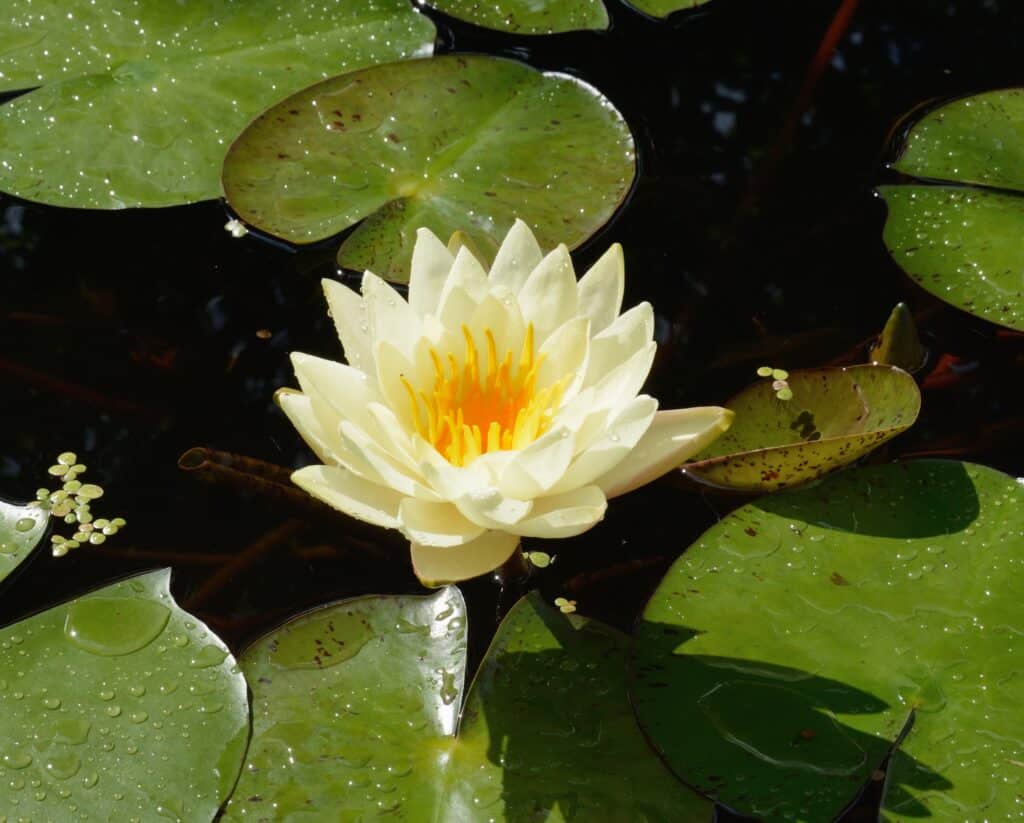
A pond without water lilies is like a garden without flowers: it lacks a soul. These aquatic plants are not only beautiful — their floating leaves shade the water, keep algae at bay and provide shelter for frogs, dragonflies and fish. And although they look exotic, they are far easier than you imagine if you respect three basic rules: sun, still water and the right depth.
What a water lily needs to thrive
Before buying the plant, make sure your pond meets its minimum conditions. Failing on any of them is the number one cause of water lilies that never bloom.
Direct sun
Water lilies need at least 5-6 hours of direct sunlight a day to flower. In partial shade they will survive, but produce leaves and few or no blooms. If your pond sits under a large tree, consider relocating it or choosing shade-tolerant flowering varieties.

Still water
They hate moving water. Fountains, waterfalls or jets that splash the leaves weaken the plant and rot the crown. Place the water lily in the calmest area of the pond, away from any fountain spray.
Depth by variety
Each type of water lily has its ideal depth, measured from the water surface down to the basket:
- Dwarf and small: 15-30 cm of water over the crown. Ideal for small ponds or tubs.
- Medium: 30-60 cm. The most versatile.
- Large or deep-pond: 60-120 cm.
- Tropical: 20-40 cm, but they need warm water (+18 °C) and cannot survive frost.
How to plant a water lily step by step
Correct planting makes the difference between a water lily that takes off and one that rots. Do it like this:
- Choose the container. Use an aquatic plant basket (mesh-sided) or a low, wide pot of 25-40 cm. The rhizome needs to spread horizontally.
- Prepare the soil. No multipurpose compost: it floats and dirties the water. Use heavy garden clay soil or a specific aquatic-plant soil. You can enrich it with a little slow-release organic fertiliser at the bottom.
- Position the rhizome. Plant it at the edge of the basket, with the growing point (where the young leaves emerge) facing the centre and barely peeking above the soil. In large varieties, set the rhizome at roughly a 45° angle.
- Cover with gravel. A 2-3 cm layer of gravel or pebbles on top of the soil stops the water disturbing it and keeps fish from digging.
- Submerge it in stages. Don’t sink it all at once: place it first at 15-20 cm depth and, once the leaves reach the surface and strengthen (2-3 weeks), lower the basket to its final depth.
Seasonal care
Feeding
Water lilies are hungry feeders. From spring to late summer, push a fertiliser tablet for aquatic plants next to the rhizome every 4-6 weeks. If you prefer the homemade route, understanding what each nutrient provides will help you choose better: we explain it in the guide to what NPK is and how to supply it naturally.
Cleaning and pruning
Remove yellow or dying leaves by cutting the stalk as close to the crown as possible, and snip off spent flowers before they set seed — that way the plant reinvests its energy in new buds. In autumn, when the plant goes dormant, remove all dead foliage so it doesn’t rot in the water.
Algae control
Lily pads are your best weapon: aim for them to cover 50-70% of the surface. Shade = less light = fewer green algae. If the water turns murky, don’t empty the pond: rebalance it with more oxygenating and floating plants.
Overwintering
Hardy varieties (temperate-climate Nymphaea hybrids) overwinter without trouble as long as the basket sits below the ice zone. In cold climates, lower the basket to the bottom of the pond in November. Tropical varieties must be brought indoors or treated as annuals.
Common problems and how to fix them
- Leaves but no flowers: almost always a lack of sun, excess nitrogen, or a large variety in water that’s too shallow. Check the three basic rules.
- Yellow leaves mid-season: nutrient deficiency → feed it. In autumn, it’s normal dormancy.
- Small, upright leaves: the rhizome has filled the basket. Divide and repot in spring.
- Fish wrecking the basket: carp and koi dig. Reinforce the gravel layer or protect the basket with a net.
- Water lily aphid: there is an aphid specific to aquatic plants. A gentle spray of water and ladybirds usually do the job; avoid insecticides near water.
Which variety to choose for your pond
- Small pond or tub (under 1 m²): Nymphaea ‘Pygmaea Helvola’ or ‘Aurora’ — small flowers, compact leaves.
- Medium pond: ‘Marliacea Chromatella’ (yellow, very free-flowering) or ‘James Brydon’ (pink-red).
- Large pond: Nymphaea alba, the hardy European white species, almost indestructible.
- Warm climate: blue tropicals (‘Director George T. Moore’), spectacular flowers but no frost resistance.
🌿 Baskets and soil for aquatic plants
Everything you need to plant your water lily: mesh baskets, aquatic-plant soil and decorative gravel.
Frequently asked questions
Can I grow water lilies without a pond?
Yes. A dwarf variety in a tub, trough or half barrel of 40-50 cm works perfectly on a sunny balcony or patio. You just need water, soil and sun.
When is the best time to plant?
From April to June, when the water is already warm and the plant starts active growth. Autumn planting gives poorer results.
Do water lilies clean the water?
They help a lot: they absorb nutrients that would otherwise feed algae and they provide shade. But they don’t replace a minimum of filtration if you keep many fish.
Are they toxic to fish or pets?
Not to fish — they coexist perfectly. For dogs and cats, eating large amounts can cause digestive upset, but serious cases are rare.
Your pond in bloom all summer
With the right variety for your depth, a well-planted basket and regular feeding, a water lily blooms from June to September with almost no intervention from you. It’s the plant that gives the most spectacle for the least work in the whole water garden.