
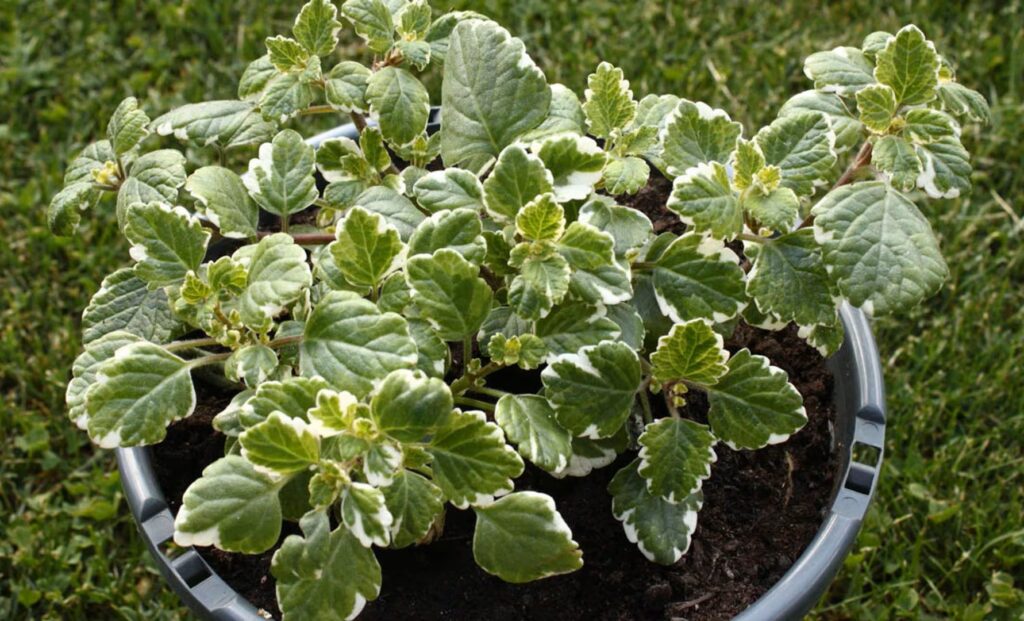
The Plectranthus coleoides, commonly known as false incense plant or incense plant, is an ornamental and aromatic plant notable for its green leaves with white edges and its pleasant mentholated aroma. Widely used as a hanging or border plant in planters, this variety ofPlectranthus
Tip: Besides beautifying your space, its intense citrus aroma helps to freshen the air, making it an excellent natural complementary solution for removing bad odors at home ecologically.
Easy to care for, vigorous, and resilient, it’s ideal for balconies, patios, terraces, or even bright indoor spaces. If you love plants that smell good, decorate, and also help keep insects at bay, this one is for you. Stick around and learn how to care for it and bring out its best version at home.

Moderate watering; let the top layer of the substrate dry out between waterings. Avoid waterlogging.


Plenty of natural light. Tolerates gentle direct sun, but in summer, it’s best to protect it from the hottest hours.

Careful manual watering. Ideally, water from the base if it’s in a hanging pot.

Easy to cultivate, ideal for beginners.

Ideal temperature between 15 °C and 30 °C. Does not tolerate frost.

By cuttings. Roots easily both in water and directly in soil.
False Incense Plant Care
Soil Requirements
The false incense plant thrives in light, well-draining soils. The ideal is to use a universal substrate mixed with perlite or coir to improve aeration and prevent waterlogging. It appreciates a substrate somewhat rich in organic matter, although it’s not demanding.
Soil Preparation
To grow it in a pot, as we’ve already mentioned, we should use a universal substrate to which we can add 20-30% perlite, coir, or coarse sand. This will help improve soil structure and prevent excess moisture that could damage our plant’s roots.
On the other hand, if we want to plant it in the garden, we must ensure that the soil is not clayey or easily waterlogged. In this case, enriching the soil with mature compost or worm castings will provide organic matter without making the substrate too heavy.
Light Requirements
When cultivating it, you can do so both indoors and outdoors, provided it receives plenty of indirect light or a few hours of gentle sun daily, specifically about 4 – 6 hours of light, preferably at dawn or dusk. However, always avoid intense midday sun, especially in warm climates.
Watering
Watering should be moderate, allowing the substrate to dry out slightly between waterings. Additionally, the false incense plant is sensitive to overwatering, so it’s advisable to avoid waterlogging, especially in pots without good drainage.
During spring and summer, you should water it 2 to 3 times a week, especially if the plant is exposed to sun or outdoors. Conversely, in winter, you’ll need to reduce the watering frequency, limiting it to once a week or even every 10 days, depending on ambient humidity. This change is because the plant’s growth slows down with lower temperatures and less sunlight, causing it to absorb less water.
Pest Protection
Although the false incense plant is quite resistant and not very prone to attacks, it’s advisable to monitor its health, especially if grown outdoors or in very humid environments, where it’s more vulnerable to certain pests, such as:
Mealybugs
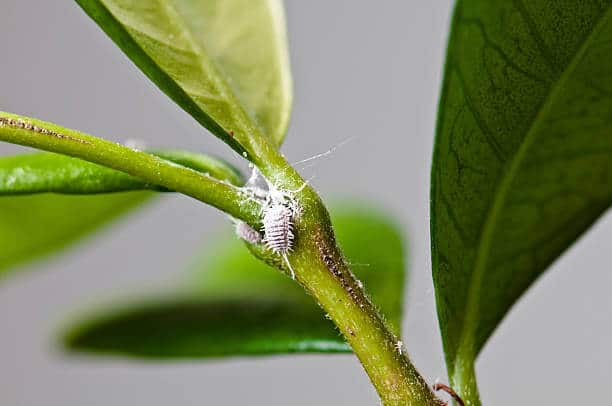
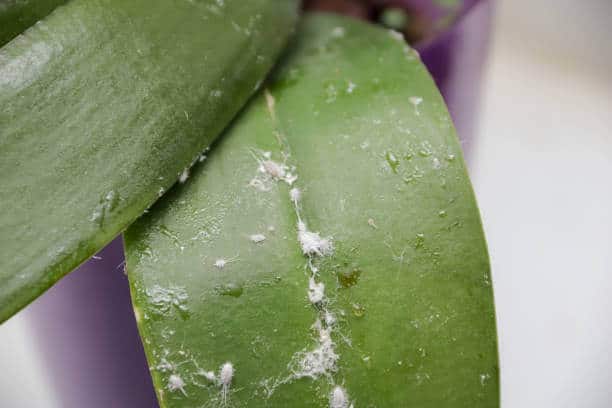
Mealybugs are a common pest on indoor and outdoor plants, easily recognizable by their appearance: small, white, cottony masses that usually appear in the leaf axils, young stems, or protected parts of the plant. They feed on sap, weakening the plant and causing slow or deformed growth. Additionally, they secrete honeydew, which not only attracts other pests like fungi (e.g., sooty mold) but can also affect photosynthesis if it covers the leaves.
To keep mealybugs at bay, it’s essential to frequently check your plant’s condition. If you have them indoors, lacking natural predators, a mild infestation can be removed with the help of a cotton swab, paying special attention to the leaf axils and young stems. In more severe cases, where the above action would be insufficient, you can use potassium soap or neem oil.
If, on the other hand, you grow your false incense plant outdoors, the way to get rid of mealybugs would be by combining visual inspection with preventive measures, such as keeping the plant aerated and removing fallen leaves or accumulated plant debris. If the infestation is severe, it’s advisable to perform selective pruning, removing and discarding the most affected parts to prevent the pest from spreading to other nearby plants. Furthermore, by growing it outdoors, you can take advantage of biological control through natural predators like ladybugs or lizards, which will help keep the population of this pest under control.
How to Propagate False Incense Plant
Propagation by Cuttings
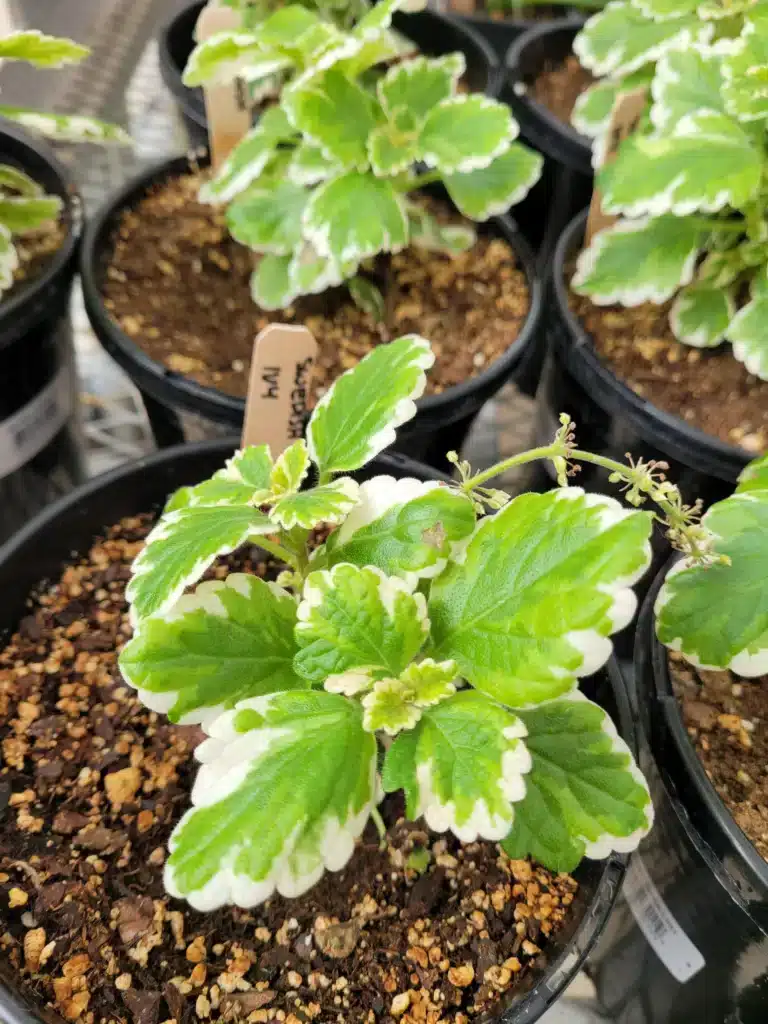
The easiest and most common way to multiply the false incense plant is through cuttings. To do this, simply cut a healthy stem about 10-15 cm long, just below a node (the point where leaves emerge). Once this cutting is taken, you can place it directly in water or in a moist, well-aerated substrate.
The false incense plant has a very fast and effective rooting capacity, especially during the warm seasons of spring and summer, when light and temperature conditions favor root development.
To ensure an optimal rooting, it’s advisable to keep the substrate always slightly moist, avoid direct exposure to intense sunlight, and provide a stable temperature of around 20-25 °C. Additionally, covering the cutting with a transparent plastic bag or placing it in a homemade mini-greenhouse will help retain moisture and create a favorable environment.
Transplanting
Once the false incense plant cuttings have developed a solid root system, with roots approximately 2 to 5 cm long, it’s the ideal time to proceed with transplanting. This step is crucial to ensure that the young plants continue their healthy growth and adapt well to their permanent environment.
When transplanting, select a container of adequate size so the plant can grow comfortably, with at least 15-20 cm in diameter and several drainage holes at the base. Once selected, place a light layer of substrate at the bottom, make a small hole in the center, and carefully place the cutting, avoiding damage to the roots. Fill around with more soil and gently press to secure the plant. Afterward, it’s crucial to water moderately to settle the soil around the roots and keep the substrate moist, as well as to avoid abrupt exposures to temperature changes or cold drafts that could cause the plant to suffer stress.
This transplanting technique, although simple, is key to preserving all the original characteristics of the false incense plant, such as its distinctive aroma and vigorous growth. A well-executed transplant ensures that the plant continues to develop strongly, guaranteeing healthy and fragrant foliage that will maintain the beauty of the parent specimen.
Companion Planting
When choosing which plants are best to accompany your false incense plant and which are not, it’s important to select companions with similar needs to facilitate care and avoid common problems like pests or stress due to inadequate conditions.
| Compatibilities | Incompatibilities |
|---|---|
| Lavender and Rosemary (both help repel insects) | Cacti and Succulents (unlike the false incense plant they need lots of direct light and scarce watering) |
| Begonias and Coleus (similar habit and needs for watering and shade) | Geraniums (unlike the false incense plant they prefer direct sun and more abundant watering) |
| Small Ferns (thrive in shade and humid conditions, providing visual variety and a favorable microclimate) |
Alocasias and Calatheas (plants with high susceptibility to fungi that could infect the false incense plant) |
Now that you know all about the care, benefits, and uses of the false incense plant, all that’s left is to take the step to have it at home. To make sure you have everything you need, we’ve prepared a small selection of products that can help you with your plant’s cultivation and maintenance.
🌿 False Incense Plant Cutting
Acts as a natural insect repellent, while beautifying any corner.
🥥 Coco Fiber Substrate
Ideal for cuttings, seeds, or pots. Improves aeration and retains moisture without waterlogging.
🪻 Lavender Seeds
Acts as a natural barrier against pests and attracts essential pollinators.