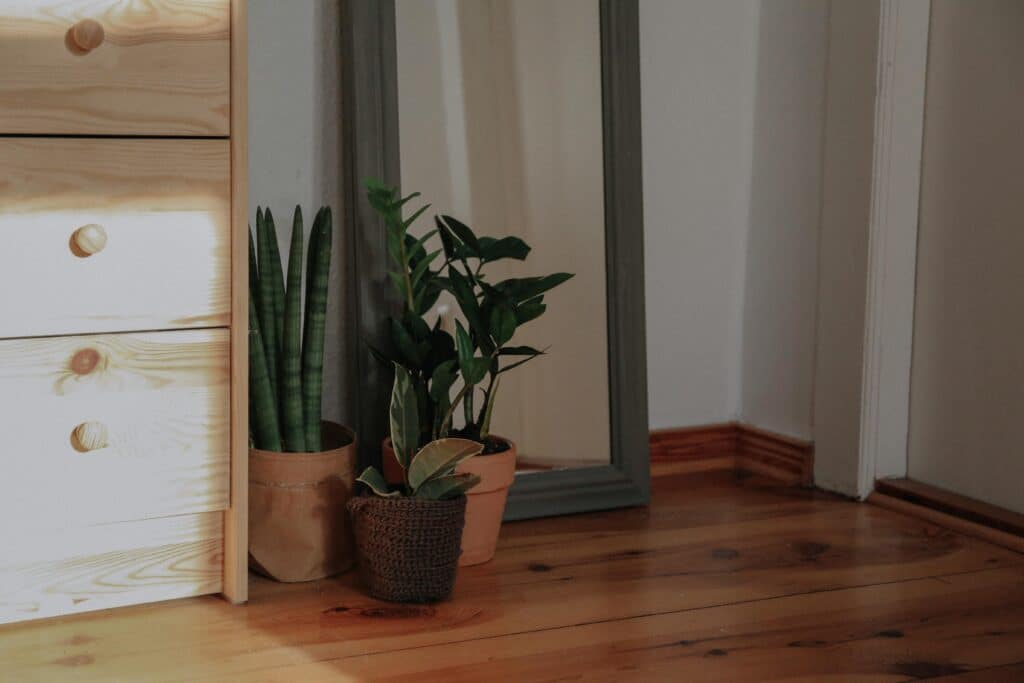
TODO: Insert Hero Image – Bright modern living room with Snake Plant, Peace Lily, and Pothos in stylish pots.
¿Sabías que el aire dentro de tu casa puede estar más contaminado que el de la calle? Productos de limpieza, pinturas, muebles y plásticos liberan Compuestos Orgánicos Volátiles (COV) como el formaldehído o el benceno.
La buena noticia es que no necesitas un filtro HEPA caro. La NASA, en su famoso Clean Air Study, descubrió que ciertas plantas comunes son máquinas naturales de filtrar toxinas y generar oxígeno puro.
Si buscas mejorar la salud de tu hogar (y de paso decorarlo), aquí tienes las 5 mejores plantas purificadoras de aire que son casi imposibles de matar.
1. Espatifilo (Lirio de la Paz)
Spathiphyllum wallisii
Es la reina de la purificación. Elimina las cinco toxinas principales analizadas por la NASA (incluyendo tricloroetileno y xileno). Además, ¡da flores blancas preciosas!
- Luz: Indirecta o sombra parcial.
- Riego: Moderado. Te “avisa” bajando las hojas cuando tiene sed.
- Ideal para: El baño (ama la humedad) o el dormitorio.
2. Sansevieria (Lengua de Suegra)
Sansevieria trifasciata
A diferencia de la mayoría de plantas, la Sansevieria libera oxígeno por la noche, lo que la convierte en la compañera perfecta para dormir mejor. Es indestructible: aguanta poca luz y olvidos de riego.
- Luz: De sombra a sol directo.
- Riego: Muy poco. Deja secar la tierra por completo.
- Ideal para: Tu mesita de noche.
3. Potos (Pothos)
Epipremnum aureum
Si no tienes mano para las plantas, empieza por aquí. El Potos crece rápido, cuelga de forma decorativa y filtra monóxido de carbono y formaldehído. Es una planta guerrera.
- Luz: Se adapta a todo, incluso oficinas con fluorescentes.
- Riego: Cuando la tierra esté seca.
- Ideal para: Estanterías altas o cestos colgantes en el salón.
Relacionado: Si te gustan las plantas que huelen bien además de limpiar el aire, echa un vistazo al Falso Incienso, que además repele mosquitos.
4. Cinta (Malamadre)
Chlorophytum comosum
Perfecta si tienes mascotas, ya que es no tóxica para perros y gatos (a diferencia del Espatifilo o el Potos, que pueden ser irritantes si se ingieren). Elimina el 95% del monóxido de carbono en 24 horas.
- Luz: Indirecta brillante.
- Riego: Frecuente en verano, escaso en invierno.
- Ideal para: Cocinas (donde se puede acumular monóxido o gas).
5. Ficus Robusta (Árbol del Caucho)
Ficus elastica
Sus grandes hojas cerosas son trampas para el polvo y las partículas en suspensión. Además de filtrar aire, ayuda a combatir los malos olores al mantener el ambiente fresco y oxigenado.
- Luz: Mucha luz indirecta.
- Riego: Mantener húmedo en verano.
- Ideal para: Salones amplios o esquinas vacías.
¿Cuántas plantas necesito?
La NASA recomienda tener al menos una planta por cada 10 metros cuadrados de espacio. No hace falta convertir tu casa en una selva (aunque nos encantaría), pero colocar un par de estas purificadoras en los lugares donde pasas más tiempo —dormitorio y salón— mejorará notablemente tu calidad de vida.
¿Cuál vas a elegir para empezar?