Do you have a corner at home where the sun never seems to reach? Don’t worry, you’re not alone. Many plant lovers (myself included) have faced the challenge of wanting to fill shady spaces with greenery without our potted plants ending up as a botanical graveyard. Visit our homepage for more tips.
The good news is that nature is incredibly adaptable. There are species that have evolved under the dense canopy of tropical rainforests, accustomed to receiving only filtered specks of light. These are the true “all-terrain plants”.
Below, I present my selection of the 10 best low-light indoor plants, those that are almost impossible to kill and that will transform your home into an oasis, even if you live in a basement apartment or an interior flat.
The Top 10 “Indestructibles”
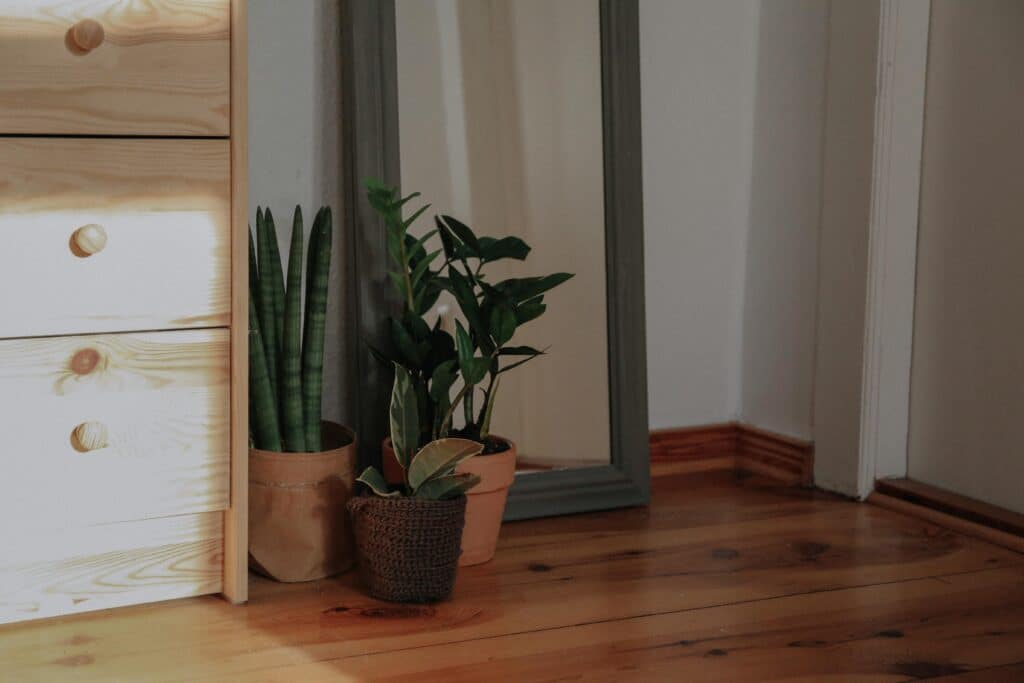
1. ZZ Plant (Zanzibar Gem)
If there were an award for the world’s most resilient plant, the Zamioculca zamiifolia would win it.
- Why it’s ideal: Its leaves are so shiny they look like plastic. It stores water in its roots (rhizomes), so it can withstand weeks of neglect.
- Light: Tolerates anything from full shade to medium indirect light.
- Key care: Don’t overwater; it prefers to be dry rather than waterlogged.
2. Sansevieria (Snake Plant / Mother-in-Law’s Tongue)
A classic that never fails. It’s interior designers’ favorite plant due to its vertical and modern lines.
- Why it’s ideal: It’s one of the best air-purifying plants according to NASA and releases oxygen at night.
- Light: Spectacularly adaptable. Lives happily in dark hallways or next to a window.
- Key care: Very occasional watering (once a month in winter is enough).
3. Pothos
The quintessential hanging plant. If you’re looking for something that grows fast and covers your shelves, this is the one for you.
- Why it’s ideal: It’s very easy to propagate from cuttings in water.
- Light: Although it prefers some brightness to maintain its variegation (white/yellow spots), it survives perfectly in dark corners (where the leaves will become greener).
- Key care: Let the soil dry out between waterings.
4. Aspidistra (Cast Iron Plant)
Its common name says it all. It was the favorite plant in Victorian doorways and courtyards because it could withstand cold, darkness, and dust.
- Why it’s ideal: It’s slow but steady growing.
- Light: Prefers shade. Direct sun can burn its leaves.
- Key care: Wipe its leaves with a damp cloth so it can “breathe” better.
5. Calathea (Prayer Plants)
If you’re looking for something with spectacular colors and patterns, the Calathea family is impressive.
- Why it’s ideal: Its leaves move (they close at night and open during the day).
- Light: They hate direct sun. In nature, they live on the forest floor, so light shade suits them perfectly.
- Key care: They need ambient humidity. Mist their leaves or use a humidifier.
6. Aglaonema (Chinese Evergreen)
An elegant plant with leaves in shades of green, silver, and sometimes pink.
- Why it’s ideal: It’s very compact and perfect for coffee tables or desks in dark rooms.
- Light: Varieties with darker leaves are the ones that best tolerate low light.
- Key care: Avoid cold drafts.
7. Boston Fern
If you’re looking for a lush, jungle-like look, the fern is king.
- Why it’s ideal: It adds visual freshness and texture.
- Light: Indirect light or partial shade.
- Key care: It’s the most demanding on this list regarding watering: the substrate should always be slightly moist.
8. Philodendron (Heartleaf Philodendron)
Often confused with Pothos, but with more pronounced heart-shaped leaves.
- Why it’s ideal: It’s incredibly forgiving and flexible. It can hang or climb if you give it a support.
- Light: Adapts to almost any shady corner of the house.
- Key care: If the branches become very long with few leaves, give it a bit more light.
10. Chamaedorea elegans (Parlor Palm)
Who said you couldn’t have a palm tree in a dark apartment?
- Why it’s ideal: It’s a dwarf palm that grows very slowly and doesn’t need direct sun to survive.
- Light: Filtered light or shade.
- Key care: Watch out for dry tips; they usually indicate a lack of ambient humidity.
Tips for Your “Dark” Plants to Thrive
Even the toughest plants need a little help if light is very scarce:
1. Don’t overwater: With less light, the plant photosynthesizes slower and consumes less water. The #1 mistake is watering them as if they were in full sun.
2. Clean the leaves: Dust blocks the little light that reaches the plant. A damp cloth once a month will make a difference.
3. Use pots with good drainage: To prevent roots from rotting due to accumulated moisture.
4. If all else fails, use grow lights: Nowadays, there are decorative LED bulbs that can give that extra boost of light to your plants in the deepest corners.
Which of these is your favorite? If you’re just starting out, I’d recommend the Sansevieria or the ZZ Plant. They are true survivors that will give you the confidence you need to fill your home with life.
Did you like this guide? Share it with that friend who says even their cacti die!