Succulents are famous for being “plants that don’t need watering.” This is the first mistake beginners make. Succulents DO need water, but they need it in a very specific way. In fact, 90% of succulents that die at home do so due to improper watering.
In this guide, you’ll learn the foolproof method for watering your Echeverias, Lithops, Crassulas, and Sedums without fear.
Understanding Succulents: The Living Water Tank
Succulents are plants that have evolved in climates where it rains torrentially once in a blue moon. That’s why their leaves, stems, and roots have become “reserve tanks.” When you water a succulent, it fills its tank. If the soil remains wet after the tank is full, the plant starts to “swell” until its cells explode and it rots.

The “Soak and Dry” Method
This is the only method you should use to water your succulents. It consists of simulating a desert storm.
1. Soak: Water generously until water drains from the pot’s drainage holes. Do not use a spray bottle or mister; water the substrate directly.
2. Dry: Do not water again until the substrate is 100% dry, from top to bottom.
#
How to Tell if the Soil is Dry?
– The Skewer Test: Insert a wooden skewer all the way to the bottom. If it comes out clean, the soil is dry. If it comes out with soil stuck to it, there’s still moisture.
– The Weight Test: A pot with dry soil weighs much less than a freshly watered one. Over time, you’ll learn to know if it’s time to water just by lifting the pot.
Special Cases: Lithops and “Crystal” Succulents
#
Lithops (Living Stones)
Lithops are the expert level of watering. They have a very strict life cycle:
– When to Water: Only when the top of the “stone” appears slightly wrinkled.
– DO NOT WATER!: Never water while they are “shedding their skin” (when a new pair of leaves emerges from the center and the old ones are shriveling). If you water at that time, the old leaves won’t die off, and the plant will rot.
#
Echeverias
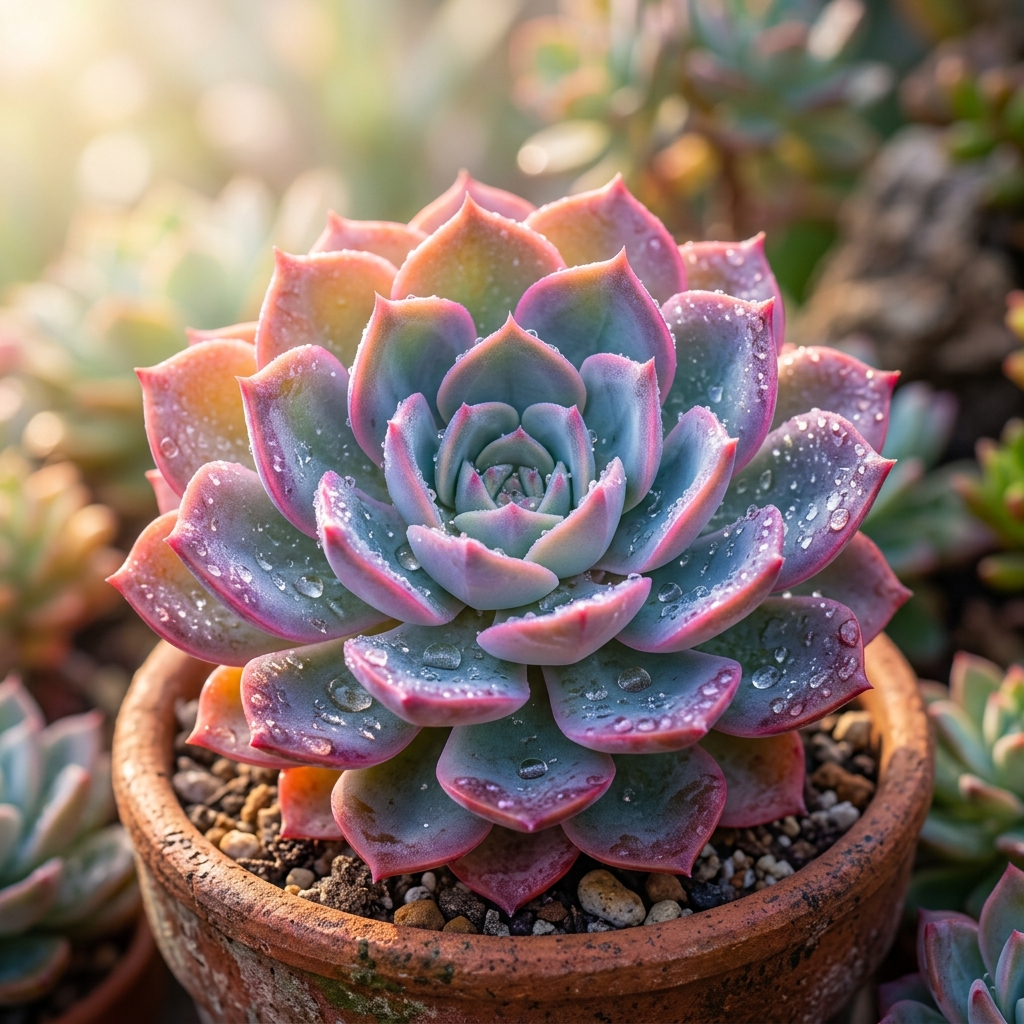
Be careful not to leave water accumulated in the center of the rosette. If water sits there, the rosette will rot in a matter of days. Always water around the edge of the pot or by bottom-watering (placing the pot in a container with water for a few minutes).
Warning Signs: What is My Plant Telling Me?
#
1. Overwatering (Emergency!)
– Translucent, yellowish, and soft leaves that fall off when touched.
– Stem with black spots or a jelly-like texture.
– Solution: Remove the plant from the soil, cut off the rotted parts, let it air dry for 3 days, and replant in new, dry soil.
#
2. Underwatering
– Wrinkled, wilted, and dull leaves.
– The plant feels light, and the substrate separates from the pot walls.
– Solution: Bottom-water to ensure the substrate rehydrates thoroughly.
Factors Influencing Frequency
– The Pot: Clay/terracotta evaporates water faster than plastic or glazed ceramic.
– The Season: In summer, you might water once a week. In winter, perhaps once a month or not at all if they are outdoors.
– The Substrate: If your soil has too much organic component (a lot of peat), it will retain too much moisture. Always add silica sand, perlite, or volcanic rock to the mix.
Frequently Asked Questions (FAQ)
Can I water with a mister?
No. Misting the leaves only increases the risk of fungal issues and doesn’t reach the roots, which is where the plant absorbs water.
Is it better to water in the morning or at night?
Early morning. This allows any excess moisture on the leaves or stem to evaporate with the day’s sun, preventing fungal growth.