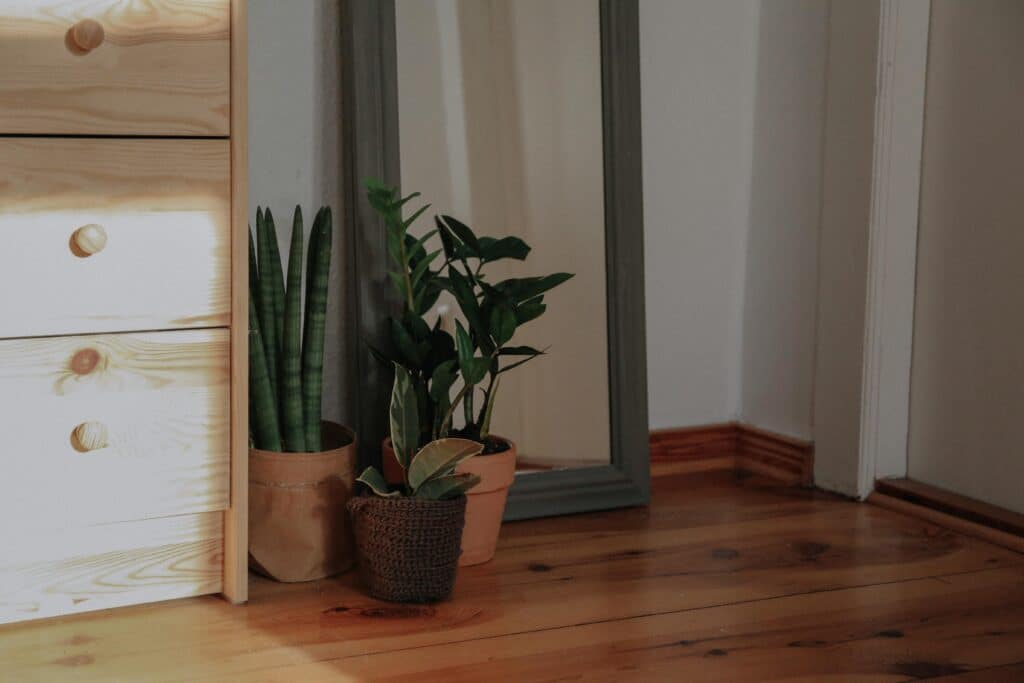
Are you looking for a plant that purifies the air, boasts a minimalist aesthetic, and most importantly, can survive even if you forget about it for weeks? The Sansevieria, popularly known as Snake Plant or Mother-in-Law’s Tongue, is your perfect ally.
In this guide, I’m going to explain everything you need to know so your Sansevieria not only survives but also looks spectacular in any corner of your home.
Why the Sansevieria is the Perfect Indoor Plant?
The Sansevieria is native to Africa and Asia, making it a natural survivor in arid climates. But its greatest superpower isn’t its resilience; it’s its ability to purify the air. According to NASA studies, it’s one of the few plants capable of absorbing toxins like benzene, xylene, and trichloroethylene, in addition to producing oxygen at night (unlike most plants).

Most Common Varieties:
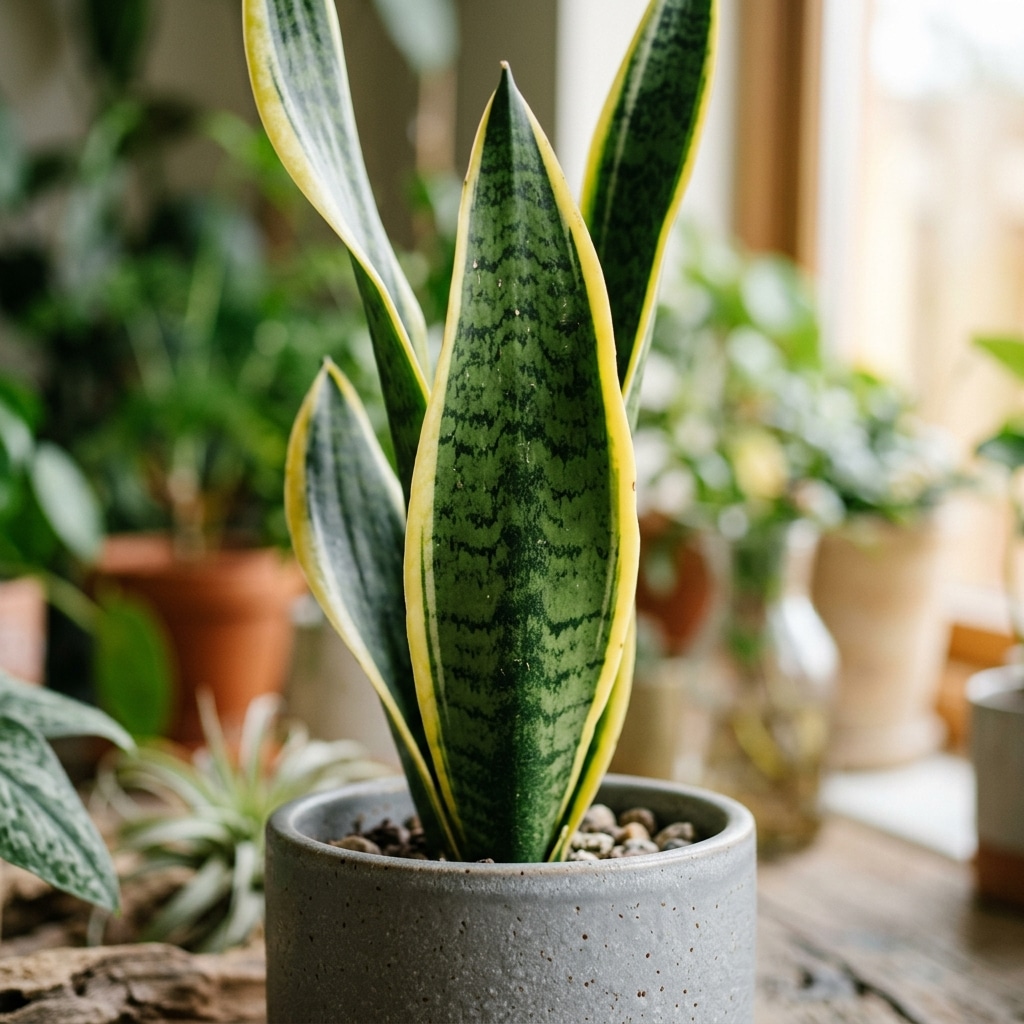
1. Sansevieria trifasciata ‘Laurentii’: The classic variety with yellow edges.
2. Sansevieria zeylanica: Features dark green leaves with light horizontal stripes.
3. Sansevieria cylindrica: Has cylindrical, spear-shaped leaves.
4. Sansevieria ‘Hahnii’: A dwarf, rosette-shaped version.
Essential Sansevieria Care Guide
Although often considered “indestructible,” following these basic tips will make all the difference between a stagnant plant and one that thrives.
1. Lighting: Adaptable to Everything
The Snake Plant (Mother-in-Law’s Tongue) is extremely flexible when it comes to light.
– Ideal Light: Bright, indirect light. This is where it will grow fastest.
– Shade: It tolerates dark corners where other plants would perish, although its growth will be almost imperceptible.
– Direct Sun: It can handle direct morning sun, but be careful with strong midday summer sun, as it could scorch its leaves.
2. Watering: Less is Much More (Rot Danger!)
If there’s one way to kill a Sansevieria, it’s by overwatering.
– Golden Rule: Let the soil dry out completely before watering again.
– Frequency: In spring and summer, once every 15-20 days may be enough. In winter, once a month is usually sufficient.
– Pro Tip: When in doubt, don’t water. It’s much better for it to be thirsty than for its roots to be waterlogged.
3. Soil and Drainage
You need a potting mix that drains very quickly.
– Use a cactus and succulent mix.
– Make sure the pot has drainage holes at the bottom. If water collects in the saucer, remove it immediately.
4. Temperature and Humidity
Being a tropical/arid plant, it prefers warm environments.
– Temperature: The ideal range is between 15°C and 25°C (59°F and 77°F). It does not tolerate frost or temperatures below 10°C (50°F).
– Humidity: It doesn’t need misting. In fact, it prefers dry environments.
How to Propagate Your Sansevieria Step-by-Step
Multiplying this plant is very simple, and you can do it in two main ways:
By Rhizome Division (The Fastest Method)
When the pot is very full, remove the entire plant and separate the “pups” by cutting the rhizome (the thick root connecting them) with a disinfected knife. Let the cut dry for a day, then plant it in a new pot.
By Leaf Cuttings
Cut a healthy leaf into pieces about 10 cm (4 inches) long. Place the base in water or directly into soil.
– Important: Always maintain the original orientation of the leaf (the part that was facing down should always go down).
– Note: If you do this with a ‘Laurentii’ variety (yellow edges), the new plant will come out entirely green, losing the yellow border. To maintain the color, use rhizome division.
Common Problems and Solutions
– Soft and Wrinkled Leaves: Rot due to overwatering. Remove the plant, cut off rotten roots, and repot it in dry soil.
– Yellowing Leaves: Too much direct sunlight or, in rare cases, lack of nutrients.
– Very Slow Growth: Lack of light or pot is too small.
Frequently Asked Questions (FAQ)
Is it toxic to pets?
Yes, Sansevieria contains saponins that can cause digestive upset if ingested by dogs or cats. Keep it out of their reach.
Does Sansevieria bloom?
Yes, but it’s rare indoors. When it does, it produces a long stalk with very fragrant white flowers. This usually happens when the plant is slightly stressed or very old.
How often should I fertilize?
It doesn’t need much fertilizer. Once a month during spring and summer with a liquid succulent fertilizer at half the recommended dose is sufficient.
Related: Top 10 Indestructible Indoor Plants