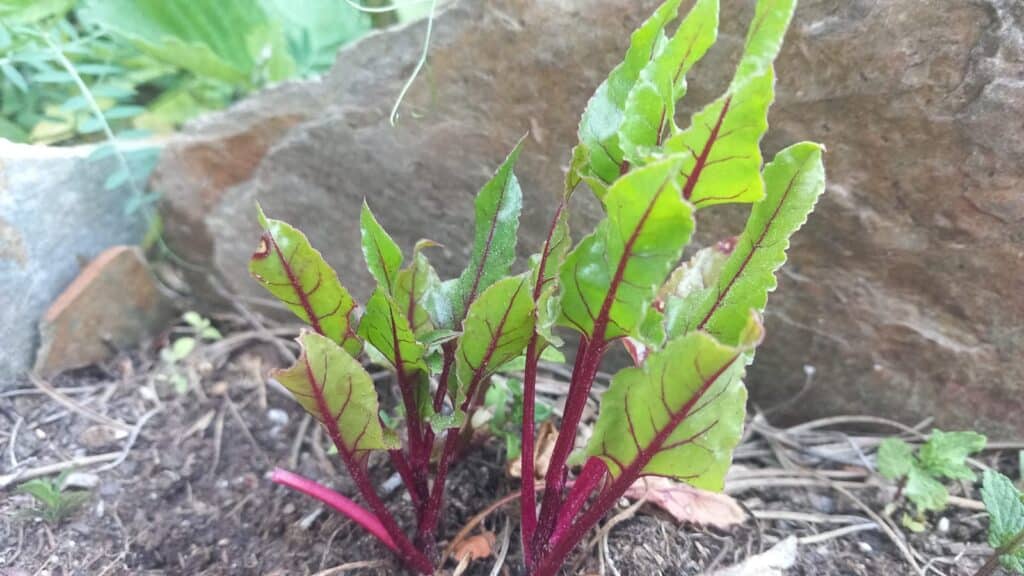
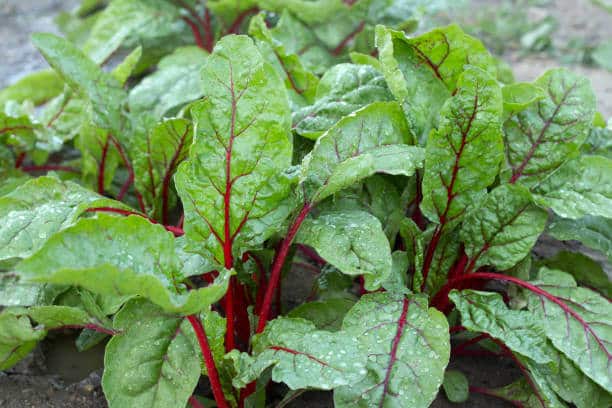
Red Swiss chard is a spectacular variety of chard (Beta vulgaris var. cicla) that stands out for its intense red stems and dark green leaves with reddish veins. This plant is not only beautiful but also rich in antioxidants, fiber, and minerals. And it’s absolutely delicious! We personally like it much more than traditional green chard.
What’s more, it’s ideal for both vegetable gardens and large pots on balconies or terraces. Its ability to regrow, cold tolerance, and low maintenance make it a perfect ally for anyone who wants to harvest their own leaves for much of the year.
We’ll tell you how to grow it step-by-step so you can transform your space into a green corner full of flavor… Keep reading and get ready to get your hands dirty! 😉

Regular and constant watering. We shouldn’t let the substrate dry out completely.

Full sun in winter, partial shade in summer.

Seepage / Drip / Careful manual watering. Avoid excessive standing moisture.

Very easy to grow, ideal for beginners.

Tolerates moderate cold. Can be grown almost year-round in temperate climates.

By Seeds.
Swiss Chard Care
Soil Requirements
Red Swiss chard isn’t particular about soil type, making it an accessible option even for beginner gardeners. However, it thrives much better in fertile, deep, and well-draining soils, where its roots can easily spread. A substrate enriched with mature compost and organic matter will encourage more vigorous growth and thicker, more colorful stems.
Soil Preparation
You can use universal substrate enriched with homemade compost or bokashi, thus improving soil fertility, structure, and moisture retention capacity. If you’re planting them in pots, make sure they are at least 30 cm deep to allow the roots to develop properly and ensure a healthy, productive plant.
Light Requirements
Swiss chard is a highly adaptable plant that can grow in both full sun and partial shade, making it an excellent option for various garden types, even in urban spaces. However, if you’re growing it in areas with very hot summers or intensely sunny climates, it’s advisable to provide some shade during the hottest parts of the day. This will help prevent heat stress, maintain substrate moisture longer, and keep the leaves from turning bitter or wilting prematurely.
Watering
Watering should be frequent but moderate to keep the substrate moist, especially during warmer months. They don’t tolerate drought well, but neither do they like waterlogging.
Watering Methods
Drip irrigation is recommended to provide constant and localized water. If you don’t have a drip system, careful and regular manual watering is also effective. The important thing is to maintain constant moisture without drowning the roots and to avoid waterlogging that can attract fungi or pests. Of course, if planting in raised beds, seepage irrigation is ideal.
Seedling Care
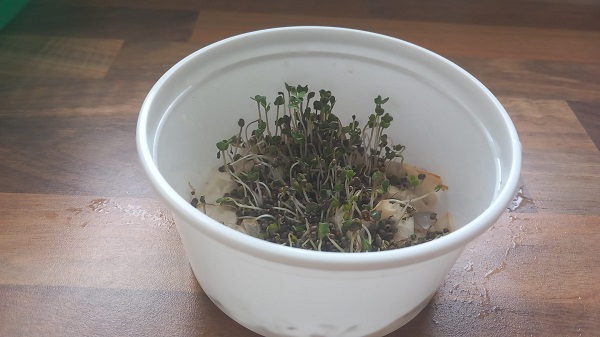
During the first few days after germination, keep seedlings in a warm, well-lit place, but without intense direct sun. Make sure the substrate doesn’t dry out. When seedlings have 2 or 3 pairs of leaves, you can transplant them to their final location.
Pest Protection
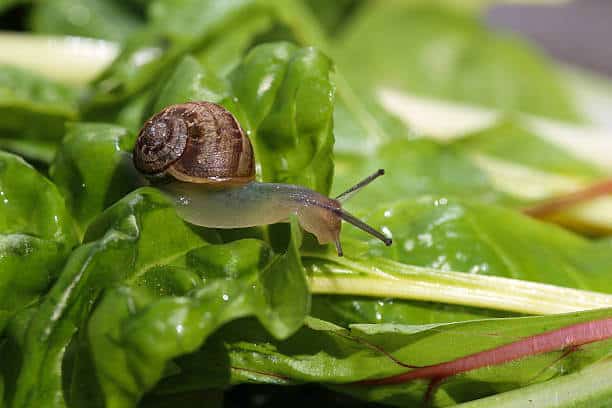
Although Swiss chard is quite resistant, it can be affected by pests such as snails and slugs, especially when the plant is young or in humid environments. Regular monitoring is recommended, and if necessary, apply remedies to deter these pests.
Snails and Slugs
Snails and slugs are the most common and persistent pests in Swiss chard crops, especially in humid environments or after frequent rains. These mollusks are particularly attracted to the tender, fleshy leaves of our plant, which they devour easily during the night. Their presence is usually revealed by the characteristic holes in the leaves and the silvery slime trails they leave behind.
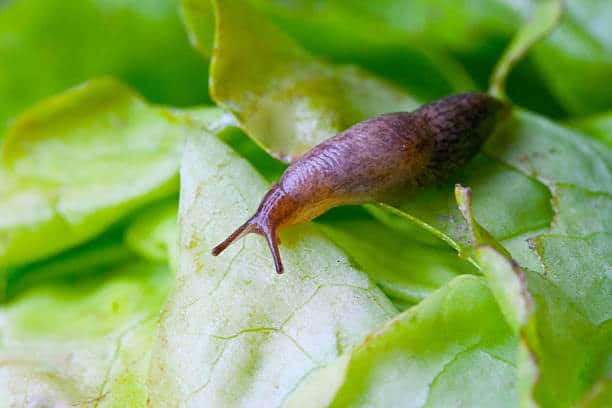
Controlling these pests can be done in several ways, combining prevention with manual or natural management. One of the most effective and sustainable methods is to observe the garden during the early morning or at dusk, when they are usually active, and remove them by hand. We can also encourage garden biodiversity by attracting natural predators, such as hedgehogs, some birds, or certain insects that help keep mollusk populations in check.
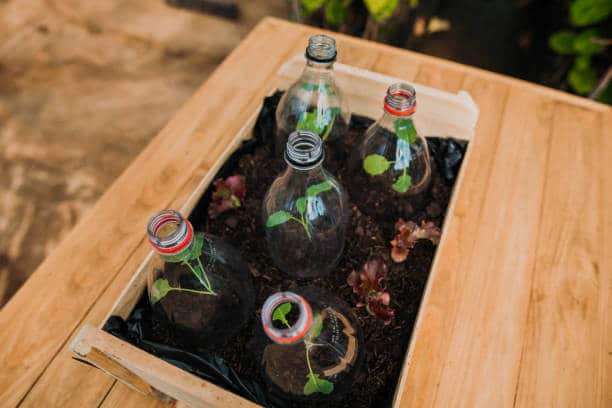
Another effective and respectful way to keep snails and slugs at bay without affecting their lives is to resort to physical strategies that prevent their access to our plants. One of the simplest involves protecting young seedlings by wrapping them with a cut plastic bottle, forming a kind of protective ring around the stem. This method creates an effective barrier that prevents mollusks from reaching the tender leaves during their nocturnal excursions.
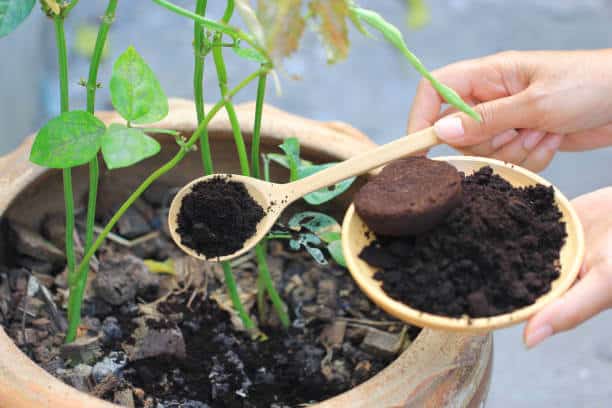
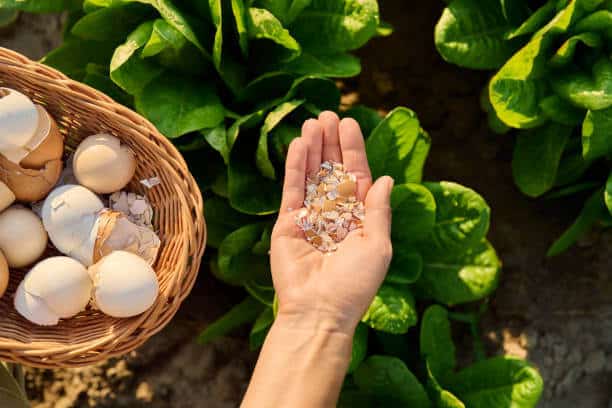
We can also reinforce crop protection by acting on the soil, surrounding the base of the Swiss chard with materials that hinder the movement of these animals. Substances such as wood ash, coffee grounds, or crushed eggshells have a dry, rough texture that is uncomfortable for them and discourages them from advancing. These are natural resources that, in addition to being accessible, do not alter the ecosystem’s balance.
These solutions, used in combination, allow us to protect our Swiss chard sustainably and efficiently, ensuring its development without compromising the health of the garden or the organisms that inhabit it.
Sowing and Harvesting Swiss Chard
Sowing
Red Swiss chard is a hardy and adaptable vegetable, ideal for growing in both gardens and pots. To start cultivation, we recommend sowing the seeds in a large seedbed, placing them in rows at a depth equivalent to twice the seed’s size. This technique facilitates effective germination. After sowing, we should water gently to keep the substrate moist, repeating whenever the soil dries out.
Approximately one month later, the seedlings will have developed 2 to 3 pairs of true leaves and will be ready for transplanting. It’s important to prepare the soil by enriching it with organic matter, and also to ensure the ground has good drainage.
Finally, remember that when transplanting, we should maintain a distance of about 20 cm between plants to allow for optimal growth.
Harvesting
After about 40 – 60 days of sowing our Swiss chard, it’s time to harvest. This always depends on the growing conditions.
The most recommended technique is leaf-by-leaf harvesting. This way, we select the well-developed outer leaves and leave the central ones intact to allow for continuous regrowth. This practice prolongs production and keeps the plant healthy.
To avoid damaging the plant, it’s advisable to use a sharp knife when harvesting leaves, making clean cuts near the base of the leaves. But if you prefer to harvest by hand, you should hold the stalk and gently pull upwards and outwards in a diagonal motion. It’s important not to harvest more than one-third of the leaves at a time, allowing the plant to recover and continue producing.
With these cares, Swiss chard can offer continuous harvests for several months, providing us with fresh and nutritious leaves for consumption.
How to Propagate Red Swiss Chard
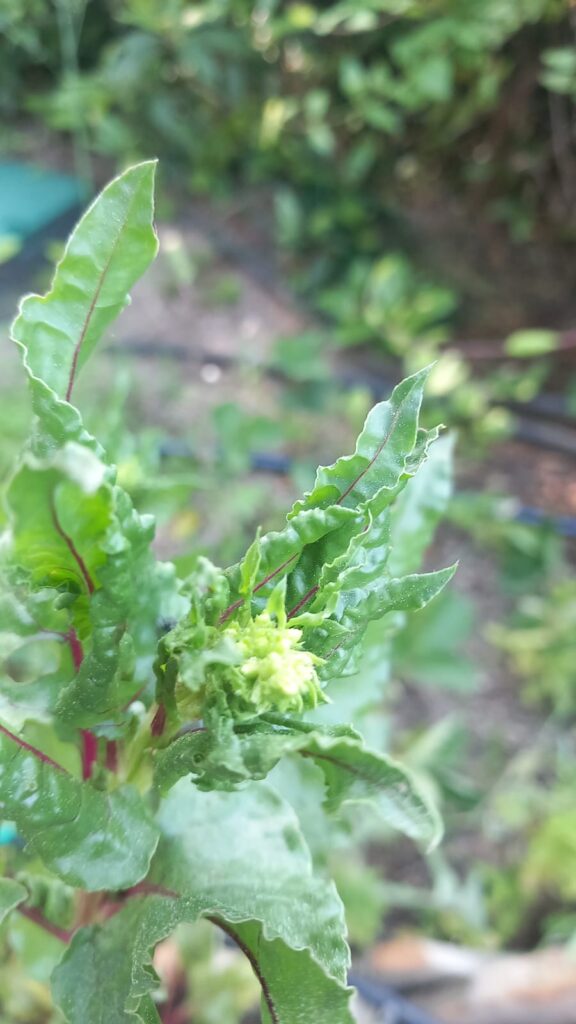
Although red Swiss chard can be easily sown with commercial seeds, you can also propagate it yourself from your own plants. To do this, you need to allow a chard plant to complete its life cycle and flower.
To obtain our own seeds, simply leave a healthy and vigorous plant in the ground from the first season, throughout the winter. This way, when temperatures begin to rise in spring, the Swiss chard will elongate its central stem, and small, clustered flowers, of a discreet greenish hue, will gradually appear.
These flowers don’t usually attract much attention, but they have a crucial function: to produce seeds, which appear in small capsules after the summer. Finally, when it’s time to collect them, we will do so when the plant’s stems are dry and the capsules, which we’ve discussed, turn a light brown color. And once completely dry, we’ll just need to rub them gently, separating the seeds from the rest of the plant material.
To store the seeds for later use, we simply need to keep them in a paper envelope (well-labeled to indicate the variety) and store them in a cool, dark place. This way, they will last for several years.
Uses of Red Swiss Chard
Culinary Uses
The leaves and stems of red Swiss chard are edible and delicious. Its red stems add color to stir-fries, soups, stews, and baked dishes. The tender leaves can also be used in raw salads, providing a juicy texture and a slight bitter note that pairs well with citrus dressings or vinaigrettes.
Furthermore, this variety contains more betalains, pigments with antioxidant and anti-inflammatory properties, making it a very healthy option.
We simply take them and sauté them directly with olive oil and sliced garlic, without boiling.
Companion Planting
When planning a diverse and healthy garden, it’s very useful to consider beneficial plant associations. Red Swiss chard shares the same companion planting principles as other chard varieties.
Thanks to its vertical growth and hardiness, it adapts well to coexisting with other species in the same raised bed. Associating it with plants that repel pests or that don’t compete for the same nutrients can help us optimize space, improve the overall health of the garden, and promote more balanced and sustainable production.
| Compatibilities | Incompatibilities |
|---|---|
| Carrot (Both have different root depths, so they don’t compete for nutrients) | Spinach (Very similar, they compete for the same nutrients) |
| Onion and Garlic (Their smell helps repel insects and slugs that can affect Swiss chard) | Beetroot (Both are from the same family, which increases the risk of common diseases) |
| Radish (Grows quickly and acts as a trap crop for some pests, protecting Swiss chard) | Potato (Both plants are nutrient-demanding and can quickly deplete the soil) |
| Lettuce (Adapts well to the same watering and partial shading offered by Swiss chard) | |
| Bush or Pole Beans (Fix nitrogen in the soil, which enriches the substrate for Swiss chard) |
Now that you know a little more about red Swiss chard, here are some recommendations that we think might be useful to you:
🌿 Red Swiss Chard Seeds
Grow your own Swiss chard at home and enjoy its authentic flavor.
🪴 30 cm Pot
Perfect for growing in your vegetable patch or garden, with ideal depth and easy to handle.