For many enthusiasts, pruning is the gardening task that commands the most respect. There is a general fear of “killing” the plant with a wrong cut. However, for roses and most ornamental shrubs, pruning is not only necessary but the secret to keeping plants young, healthy, and, above all, loaded with flowers each season.
In this practical guide, we will demystify rose and shrub pruning, teaching you when, how, and with what tools you should perform it for professional results.
Why Should We Prune?
Pruning is not just “cutting branches.” It serves three vital functions:
- Cleaning: Removing dead, diseased, or damaged wood that wastes energy.
- Thinning: Allowing sun and air to reach the center of the plant, preventing fungal growth from stagnant moisture.
- Stimulation: When cutting old branches, the plant responds by generating new shoots with much more vigor and floral capacity.
The Perfect Timing: When to Take Out the Shears?
The general rule for rose pruning and deciduous shrubs is to do it during dormancy, at the end of winter (February or March in the Northern Hemisphere), just before the new buds begin to swell.
Important Exception: Shrubs that bloom in early spring (like lilac or forsythia) are pruned just after their flowers fade, never in winter, or you would be removing that year’s blooms.
Types of Pruning for Roses
1. Cleaning Pruning
Remove branches thin as a pencil, those crossing towards the interior of the rose bush, and “suckers” (branches growing with great force from below the graft).
2. Production Pruning (Flowering)
We look to leave between 3 and 5 young main branches distributed in a cup shape. Cut the rest. Trim the chosen branches leaving about 3 or 4 buds (nodes) from the ground.
How to Make the Perfect Cut
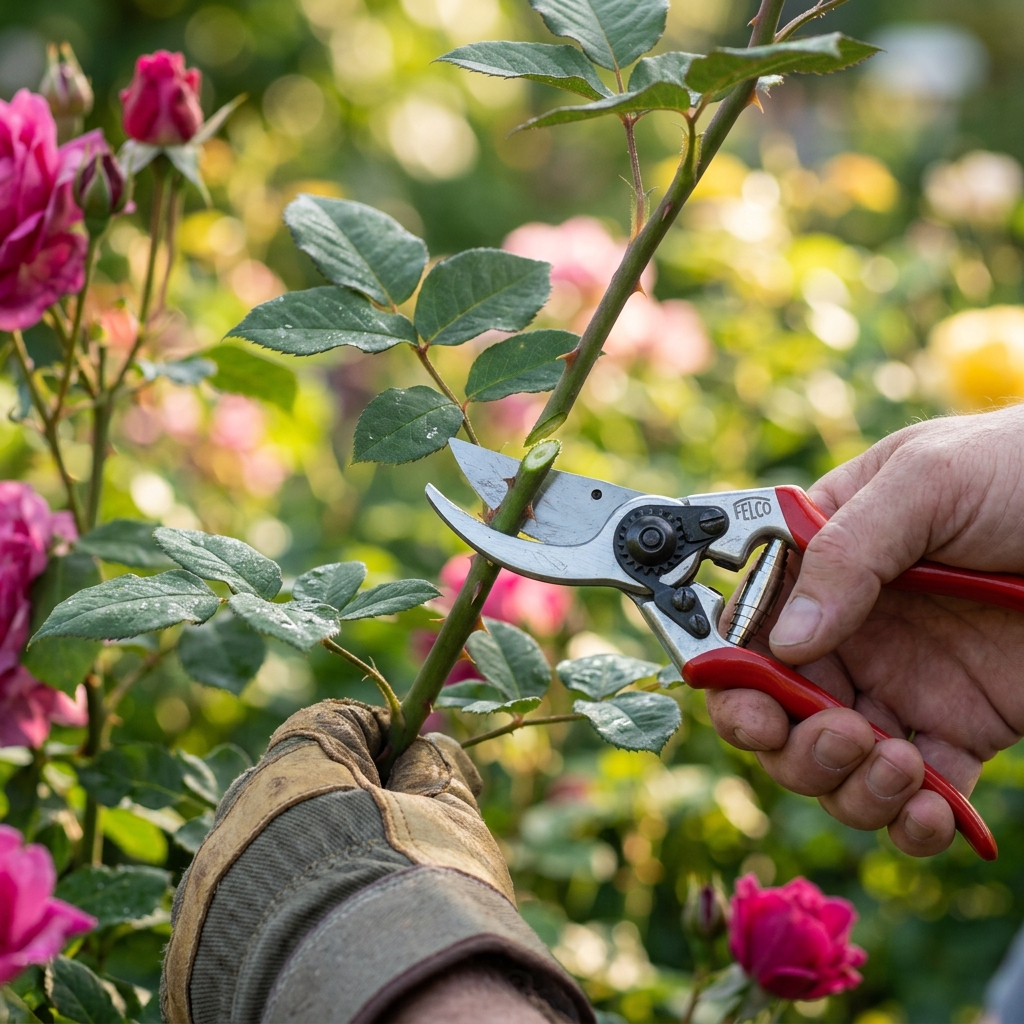
- Slanted Cut: Always at about 45 degrees, facing away from the bud. This makes rainwater slide off and not accumulate on the bud, preventing rot.
- Clean Cut: Always use very sharp tools. A frayed cut is an open door to diseases.
- Disinfect: Clean blades with alcohol after pruning each plant to avoid spreading viruses or fungi.
Frequently Asked Questions (FAQ)
Should I prune faded roses during summer?
Yes! This is called “deadheading.” By removing the spent flower, you prevent the plant from wasting energy on seed production and force it to produce a new rose quickly.
What happens if I prune roses too late?
The plant will delay its flowering and lose sap from the cuts, which can weaken it. Late is better than never, but it’s ideal to respect winter dormancy.