
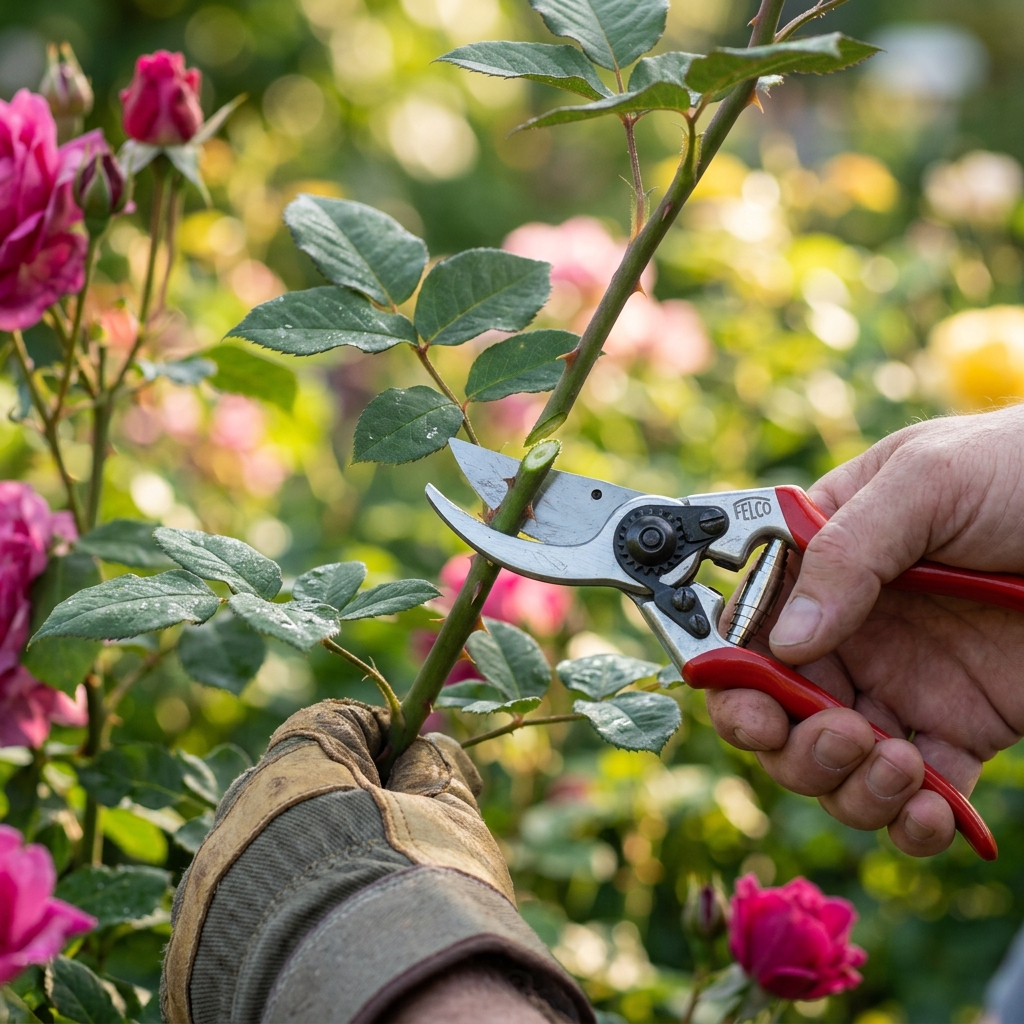
Gardening is a constant dialogue with nature, and pruning is one of the most important conversations we can have with our plants. Far from being an act of aggression, it’s a necessary caress that revitalizes, shapes, and, most importantly, sets the stage for a breathtaking floral spectacle. If you dream of roses overflowing with blooms or shrubs bursting with color, understanding and applying the right pruning techniques is your golden ticket.
Why Prune? Beyond Just Aesthetics
Many believe that pruning is solely for making plants look pretty. While it’s true that it improves shape and structure, its benefits extend far beyond the superficial. Pruning is an essential practice for the health and vitality of your roses and shrubs. By removing dead, diseased, or damaged branches (the famous “3 Ds”), we prevent the spread of diseases and pests. Smart pruning also improves air circulation through the plant, reducing humidity and the risk of fungi.
Furthermore, pruning is the engine that drives new wood growth, and for many plants, it is precisely these young shoots that give us the largest and most abundant flowers. By pruning, we redirect the plant’s energy towards producing blooms and fruits, rather than allowing it to be wasted on weak or unnecessary growth.

Essential Tools for a Clean Job
Before diving into the task, make sure you have the right tools and that they are kept in optimal condition. A clean, precise cut is vital for the plant’s health, as it minimizes damage and accelerates healing.
* Bypass Pruners: Indispensable for clean cuts on live stems up to 2 cm in diameter. They are your best allies for roses and finer branches.
* Anvil Pruners: Useful for dead or harder wood, but they can crush living tissue, so use them with caution on healthy branches.
* Loppers: For thicker branches that you can’t cut with one-handed pruners, up to about 5 cm. Their long handles provide great leverage.
* Pruning Saw: For very thick branches that loppers can’t handle. Look for one with sharp teeth and a good grip.
Key Tip: Hygiene is paramount! Clean and disinfect your tools with alcohol between each plant (especially if you’re dealing with diseases) to prevent spread. Make sure they are sharp; a dull cut tears the branch, leaving it vulnerable. And, of course, protect your hands with sturdy gloves and your eyes with safety glasses.
The Art of Pruning Roses: A Garden of Delights
Roses are perhaps the kings of the garden, and their pruning is an annual ritual that ensures their majesty.
When to Prune Roses
Most modern roses (hybrid teas, floribundas, grandifloras) are pruned in late winter or early spring, just as the buds begin to swell and the risk of severe frosts has passed. This is the ideal time to shape them and stimulate vigorous growth.
* Climbing and Rambling Roses: The main pruning is done after they bloom, especially if they flower only once a year. Remove old wood and branches that have already flowered to stimulate new growth.
* Once-Blooming Roses (like many old garden roses): Prune immediately after flowering. Pruning in winter would remove the floral buds for the next season.
* Deadheading: Throughout the entire season, remove faded flowers to encourage new blooms and maintain a tidy appearance.
How to Prune Roses Step-by-Step
1. Start with the basics: Remove all dead, damaged, or diseased branches. Cut them back to healthy wood.
2. Clear the center: Remove weak stems, those growing inwards towards the rose, and those that cross each other. The goal is to create an open structure that allows for good air circulation and light penetration.
3. Define the shape: Visualize an open vase shape. Leave 3 to 5 strong, well-spaced stems, which will form the base of your rose.
4. Make smart cuts: Cut at a 45-degree angle, approximately 0.5 – 1 cm above an outward-facing bud. This angle prevents water accumulation and encourages outward growth.
5. Prune for height: For shrub roses, pruning can reduce the height by one-third to one-half, depending on the vigor you want for new shoots. A more severe prune tends to produce fewer, but larger, flowers; a lighter prune, more flowers, but smaller ones.
Pruning Flowering Shrubs: Each at Its Own Pace
Pruning shrubs is more an art of observation than a strict rule, as its timing and method depend on when and how they bloom.
Shrubs That Bloom on Old Wood (Early Spring)
These shrubs form their flower buds on the previous year’s stems. Pruning them in winter or early spring would mean cutting off all their flowers.
* Examples: Forsythia, Lilacs, Rhododendrons, Azaleas, Weigelas, Magnolias, Viburnum (many varieties).
* When to prune: Immediately after they finish flowering. This gives them the entire season to develop the flower buds for the following year.
* How to prune: Perform a renewal prune, removing the oldest and thickest branches from the base. You can also thin out the center to improve circulation and remove weak or diseased branches. Avoid pruning more than one-third of the shrub in a year.
Shrubs That Bloom on New Wood (Summer/Fall)
These shrubs produce their flowers on shoots that grow in the same season.
* Examples: Hydrangea paniculata (Panicle Hydrangea), Spiraea japonica, Rose of Sharon (Hibiscus syriacus), Buddleia (Butterfly Bush), Lavender.
* When to prune: Late winter or early spring, just before new growth begins.
* How to prune: You can be more aggressive with pruning these shrubs. Cut them back severely to stimulate new, vigorous shoots that will produce abundant flowers. For example, Buddleia can be pruned by up to one-third of its size, and some Spiraeas benefit from a hard prune almost to the ground every few years to fully rejuvenate them.
Remember, every plant is a world unto itself. Observe, learn, and adjust your technique. With every cut, you’re not just pruning; you’re cultivating a stronger, healthier, and undoubtedly much more spectacular garden. The reward for your effort will be an explosion of color and fragrance that will fill your green space with life and joy. So, with pruners in hand and a good dose of confidence, get out into the garden and let the magic of pruning transform your plants!