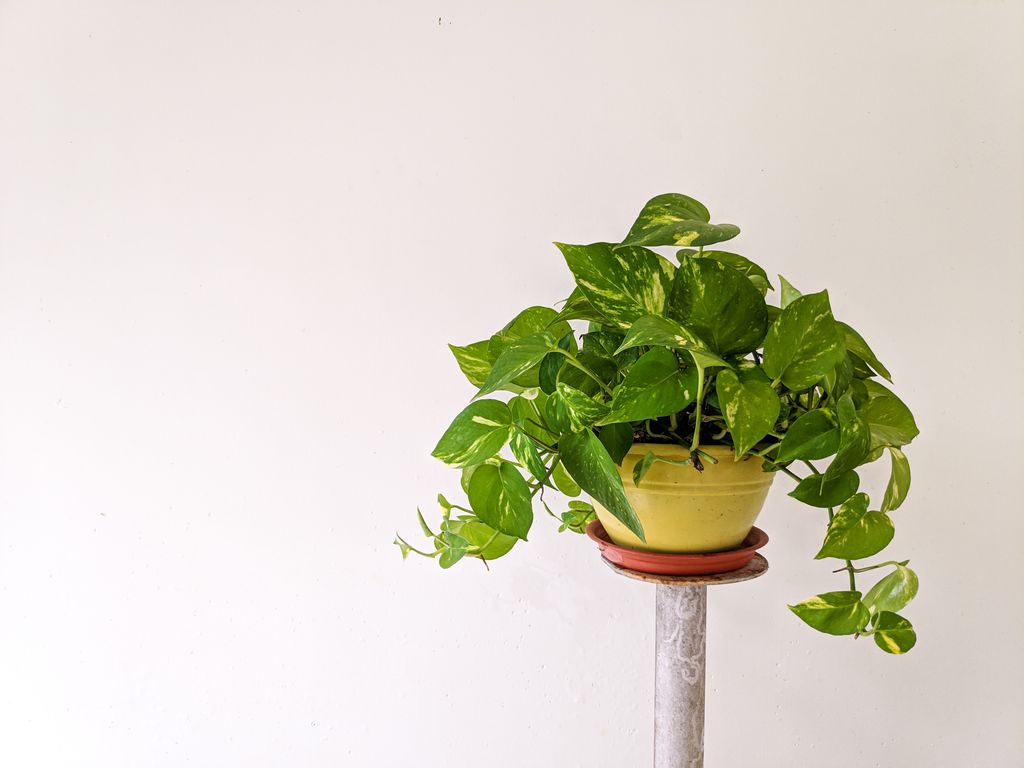
If you’re just getting started with houseplants, Pothos (Epipremnum aureum) is one of the best possible choices. It’s tough, it purifies the air and it grows astonishingly fast in almost any corner. With minimal care, your pothos won’t just survive — it will turn your home into a green oasis.
🏡 Location and Light: The key to success
Pothos is famous for its versatility. It adapts to a wide range of light conditions, which makes it the perfect plant for offices or apartments with little natural light.
- Bright indirect light: Its ideal scenario. Under these conditions, pothos grows much faster and develops bigger leaves.
- Shade or low light: It tolerates dark corners perfectly well, although growth will be slower.
- Variegated varieties: If you have a ‘Marble Queen’ or ‘Golden’ pothos, they need more light to keep their white or yellow splashes. Left in deep shade, the leaves turn completely green to maximize photosynthesis.
🌊 Watering Frequency: The most common mistake
Most pothos die from too much water, not too little. Waterlogged soil rots the roots quickly (root rot).

When to water? The golden rule is to wait until the top 2-3 centimeters (about an inch) of soil are completely dry. You’ll notice the plant “talks” to you: when it’s thirsty, its leaves go slightly limp or “sad”. A moderate watering perks them back up within a few hours.
🌱 Soil and Feeding
So the roots can breathe properly, use a quality all-purpose potting mix blended with some perlite to improve drainage. During spring and summer (the active growing season), you can feed it once a month with a liquid fertilizer for green plants.
🧗♀️ Growth: Trailing or Climbing
Pothos is a natural climber. In its habitat it uses aerial roots to scale trees. You have two aesthetic options:
- Waterfall effect: Let it trail from high shelves or hanging baskets. Its vines can reach several meters in length.
- Vertical effect: Give it a moss or coco coir pole. As it climbs, the plant feels at home and tends to produce larger leaves.
🍃 Benefits: A natural air purifier
According to NASA studies, pothos is one of the most effective plants at removing indoor air toxins such as formaldehyde, xylene and benzene. Having a pothos in the bedroom or living room isn’t just about looks — it’s about health.
❓ Common problems and solutions
- Yellow leaves: Usually points to overwatering or a lack of nitrogen.
- Brown tips: The air is too dry. Mist the leaves with water occasionally.
- Very long stems with few leaves: Not enough light. The plant “stretches” looking for brightness.
Easy water propagation
One of pothos’ biggest perks is how easy it is to multiply. Cut a stem with 2-3 nodes, remove the leaves from the lowest node and place it in a glass of water. In 2-3 weeks you’ll have enough roots to transplant it into a small pot. Perfect for gifting or growing your collection for free.Frequent problems and their causes
- Yellow leaves: overwatering or lack of light. Check both factors before acting.
- Leaves with brown edges: dry air or water with too much chlorine. Let tap water sit for 24h before watering or use filtered water.
- Pale green leaves or lost variegation: too little light. Move it closer to a window.
- Very long stems between leaves (leggy growth): definitely not enough light. It won’t fix itself — prune the stretched part and place the plant in a brighter spot.