Did you know that some of the most common plants we have in our vegetable patches and gardens can be powerful allies for their care? There’s a simple, natural, and highly effective way to harness their properties by creating a homemade preparation known as liquid plant feed (or “purin”), which nourishes, strengthens, and protects our crops.
This method, widely used in organic gardening, transforms fresh ingredients into a liquid teeming with life. We don’t need extensive resources, just a little patience… and a tolerance for an intense aroma.
In this post, we’ll tell you everything you need to know to prepare your own liquid plant feed at home, use it safely, and get the most out of it in your vegetable patch or garden.
What it is
Liquid preparation of plants fermented in nutrient-rich water
Ingredients
Fresh plants (nettle, comfrey, dandelion) + chlorine-free water
Fermentation
7-14 days, stirring daily until it stops foaming
Main uses
Liquid fertilizer, pest repellent, growth stimulant
Application
Dilute to 10% or 20% depending on use
What is Liquid Plant Feed?
Liquid plant feed is a liquid preparation obtained from the fermentation of plant material in water. It’s a natural remedy with multiple benefits for the organic garden, as it provides nutrients, improves soil vitality, and acts as a repellent against some pests.
Its preparation is simple and makes use of wild herbs like nettle, comfrey, or dandelion. When fermented, these plants release beneficial compounds (nitrogen, potassium, calcium, or silica) that we can then apply directly to the soil or spray onto the leaves.
Uses for Liquid Plant Feed
Liquid plant feed is as versatile as it is potent. Its application depends on the base plant you use and the current stage of your crop. Here are the most common uses so you can get the most out of it:
- Liquid fertilizer: Applied diluted when watering, liquid plant feed delivers nutrients directly to the soil, promoting more vigorous growth, as they are especially rich in nitrogen, phosphorus, and potassium.
- Growth stimulant: During key stages like transplanting or the onset of flowering, watering with a well-balanced liquid plant feed can give an extra boost to your plants.
- Natural fortifier: When sprayed on leaves, liquid plant feed strengthens your plants’ defenses, helping them better resist diseases and adverse conditions.
- Pest repellent: Some liquid plant feeds, such as those made from fern or nettle, can deter aphids, spider mites, or mealybugs. While not aggressive insecticides, they do create a less appealing environment for many harmful insects.
- Compost conditioner: If you add liquid plant feed to your compost bin, you’ll accelerate decomposition and increase the nutrient content of the final compost.
How to Prepare It
Preparing liquid plant feed at home is a simple and very accessible process that only requires a little patience and some basic materials. The key lies in the fermentation of the selected plants. When left to steep in water for several days, they release their compounds, resulting in a liquid concentrate full of nutrients and beneficial microorganisms for your garden.
Below, we’ll tell you what you need and how to do it step-by-step:
Materials Needed
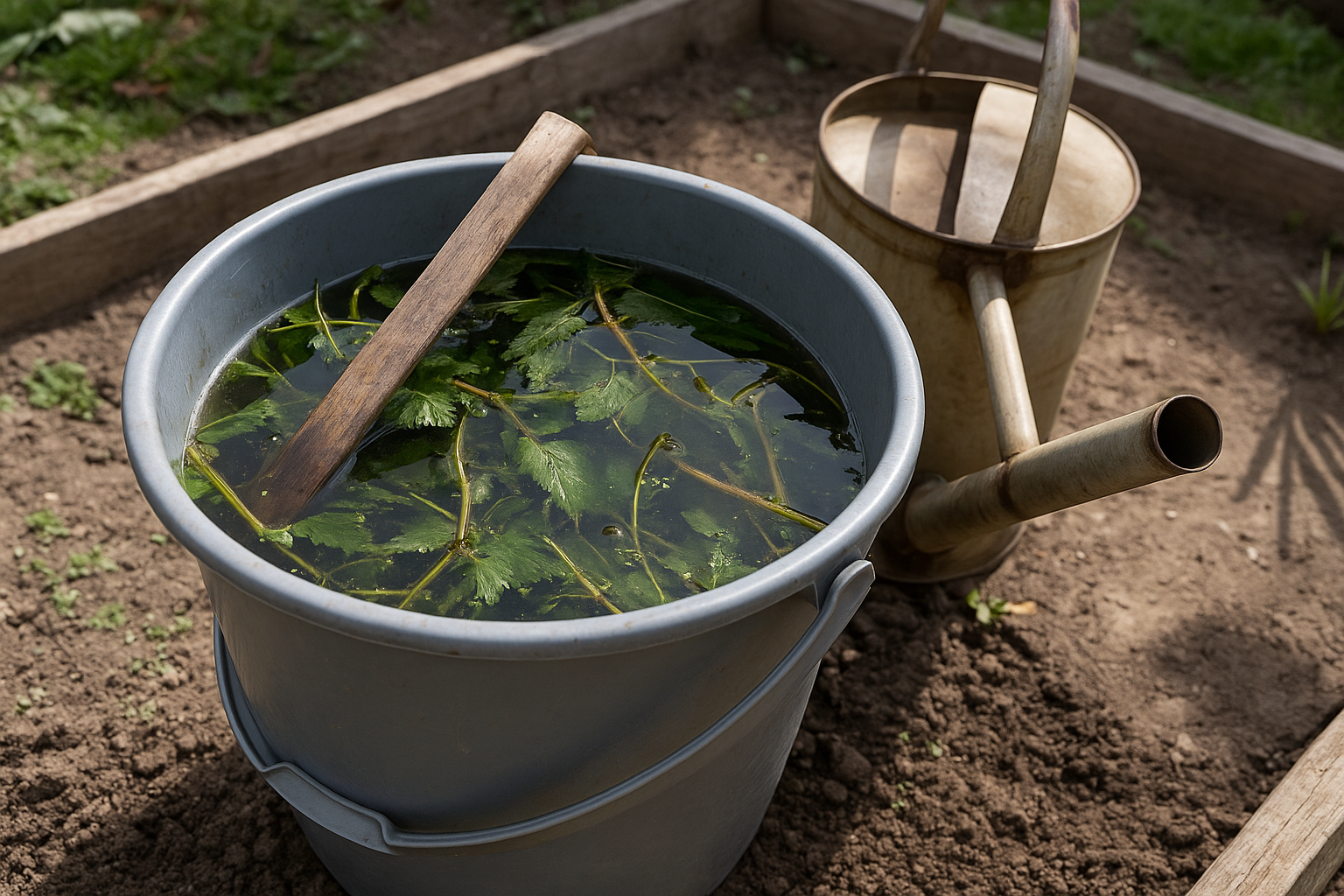
- A large plastic or clay container (never metal)
- Non-chlorinated water. You can use rainwater or water that has sat for 24 hours.
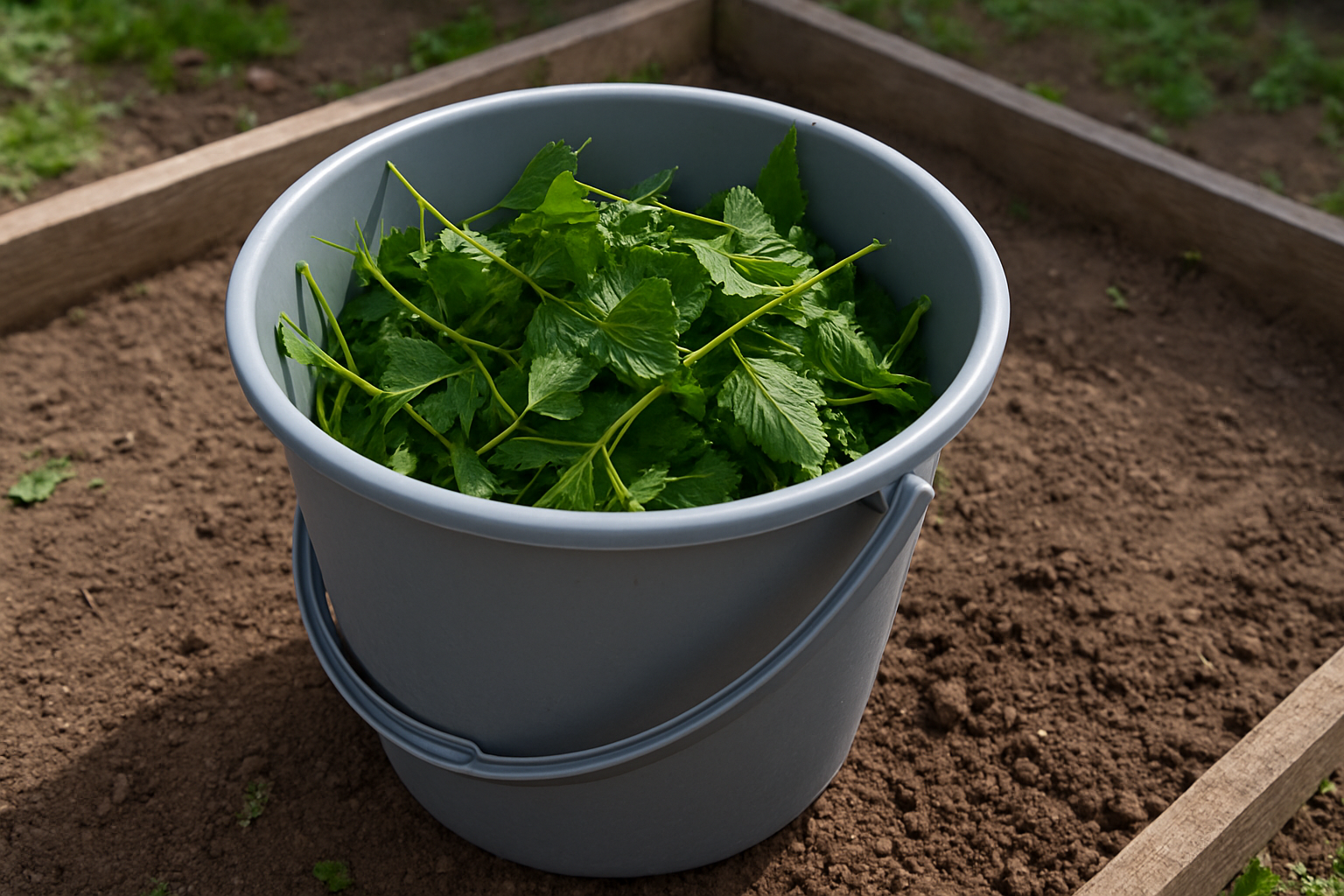
- Chopped fresh plants (nettle, comfrey, horsetail, etc.)
- A stone or grid to help keep the plants submerged.
- A cloth or lid that allows it to breathe (mosquito net, burlap sack…)
- A stick for stirring.
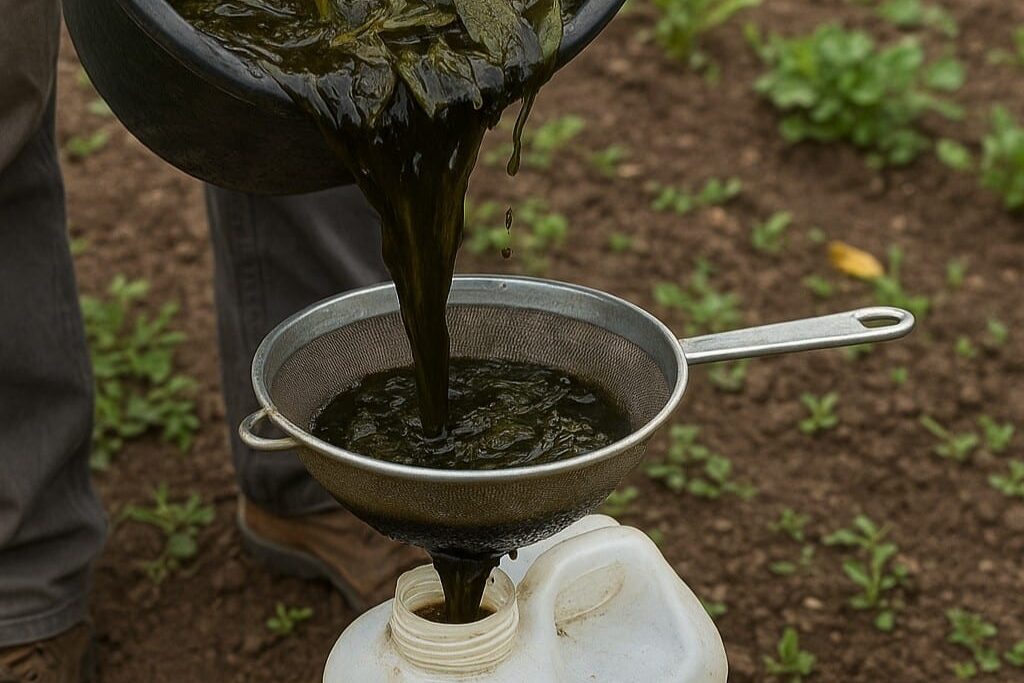
- Bottles or jugs to store the filtered liquid plant feed.
Step-by-Step
1st Cut the plants: Chop the leaves and stems into small pieces to facilitate fermentation.
2nd Place the plants in the container: Approximately 1 kg of plant material per 10 liters of water.
3rd Add the water: Cover the plants completely with water. If using tap water, let it sit for 24 hours beforehand for the chlorine to evaporate.
4th Keep the plants submerged: Use a stone, grid, or any clean object to keep the plants below the water level.
5th Cover the container: Cover it with a cloth that allows air to pass through but prevents insects from entering.
6th Stir daily: Mix once a day to oxygenate and aid the fermentation process.
7th Wait and observe: After 10 – 15 days, depending on the temperature, the liquid plant feed will be ready. You’ll know by its strong smell and dark color.
8th Filter and store: Strain the liquid and store it in opaque bottles, in a cool, dark place.

Storage
Once filtered, liquid plant feed can be stored for several weeks or even months if kept under the right conditions. Although its effectiveness is greater when fresh, with some basic care, you can extend its shelf life and continue to reap its benefits in the garden.
To keep it in good condition:
- Store it in opaque or dark glass containers: This way, you’ll protect it from light, preventing the degradation of its compounds.
- Seal it airtight but with occasional ventilation: While it’s important that the container is well-sealed to prevent air entry, it’s advisable to open it briefly every now and then to release any accumulated gases.
- Keep it in a cool, shaded place: Store the liquid plant feed in a location with a stable temperature, away from direct sunlight and heat sources.
- Shake before use: Before applying the liquid plant feed, shake the container well to homogenize the components.
Avoid storing large quantities if you won’t be using them soon, and if you notice the smell changes drastically or strange molds appear, it’s best to discard the contents and prepare a new batch. This way, you’ll have a natural and potent liquid fertilizer on hand when your plants need it most.
How to Apply Liquid Plant Feed
Applying liquid plant feed in your vegetable patch or garden is simple, but it’s important to do it correctly to maximize its properties without harming your plants. Depending on the plant used and the cultivation stage, the application may vary slightly, but there are some general guidelines you can follow:
Diluted as a Fertilizer
The most common method of application is to dilute the liquid plant feed in water before watering. The standard ratio is 1 part liquid plant feed to 10 parts water (10% dilution). This mixture is applied directly to the soil or growing medium, near the roots, and provides essential nutrients, in addition to improving microbial activity in the soil.
Sprayed as a Preventive
In cases where you use nettle liquid plant feed, you can spray it onto the leaves, diluted to 5% (1 part liquid plant feed to 20 parts water), to strengthen the plant against pests and diseases. However, avoid doing so during intense sun hours to prevent scorching the leaves.
Boost During Key Moments
Apply liquid plant feed at 10% dilution after transplanting, during active growth, or if you detect mild nutritional deficiencies. This helps stimulate development and improve plant resistance.
Important Precautions
- Never apply liquid plant feed undiluted, as its concentration can damage the roots and leaves of your plants.
- Avoid overdoing it; more is not better. Moderate use every two weeks is sufficient in most cases.
- Pay attention to the plant’s cycle: during flowering or fruiting stages, do not overdo nitrogen-rich liquid feeds (like nettle feed), as they can cause the plant to grow too many leaves and stems but produce fewer flowers or fruits.
- If it’s your first time using it, each species and environment can react differently, so try it on a few plants first.
Here’s a selection of products that can make your work easier if you decide to prepare your own liquid plant feeds:
🪣 10L Bucket
A basic item for preparing liquid plant feeds, soil mixes, or composting organic waste.
🗑 Strainer/Fabric Filter
Filters natural extracts and preparations simply and effectively. Ideal for vegetable patches and organic creations.
👜 Jute Sack
A basic for use in garden and allotment projects. Natural, resistant, and versatile.