If you grow at home and are looking for a way to feed your vegetable garden with natural nutrients, hot compost can become one of your best allies. This technique allows us to obtain mature compost in much less time than conventional methods, which is especially useful when we need to quickly improve the soil between seasons or revitalize demanding crops. And although it requires a bit more attention at the beginning, its results are worth it: a rich, balanced fertilizer ready to use in just a few weeks.
Therefore, in this guide, we will walk you through step-by-step so you can easily put it into practice from home, using accessible resources and respecting the balance of the environment.
What is Hot Compost?
Hot compost, or thermophilic composting, is a composting method that accelerates the decomposition of organic waste through the active control of three key factors: temperature, aeration, and the balance between green and brown materials. Unlike traditional (cold) composting, which can take between six months and a year to complete, hot compost allows us to obtain it in a much shorter time.
This process is based on the activity of thermophilic microorganisms, that is, bacteria and fungi that thrive at elevated temperatures, typically between 50°C and 80°C. These multiply and generate heat while decomposing organic matter, which in turn causes that heat to accelerate decomposition and help eliminate odors, weed seeds, and even possible pathogens.
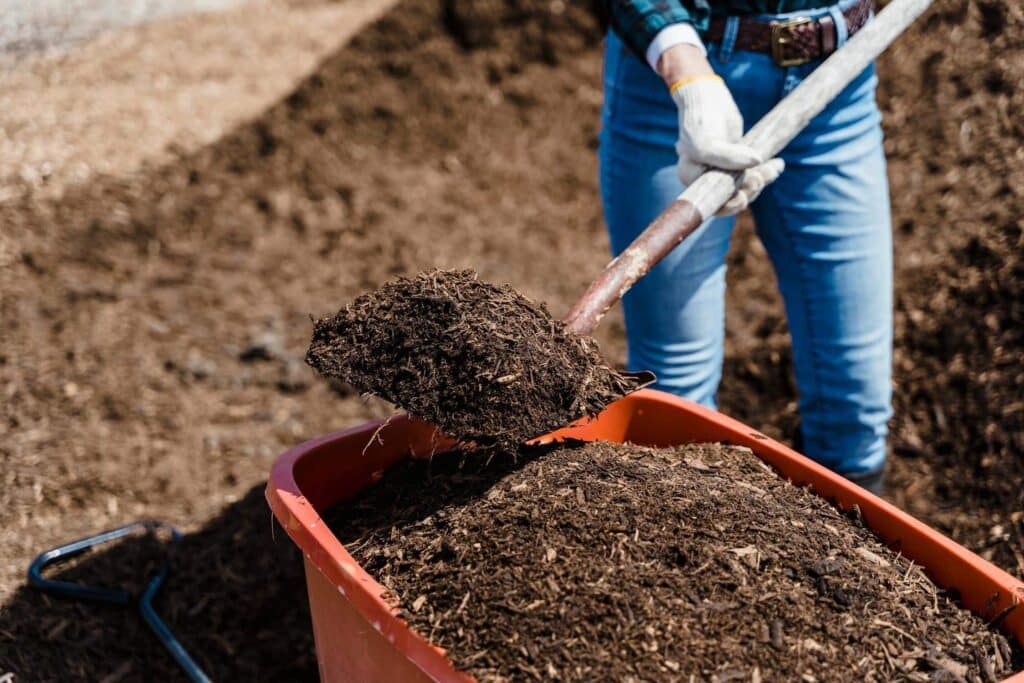
When making hot compost, it requires a certain degree of human intervention. It’s not enough to just pile up waste; it’s necessary to mix the materials well, check the moisture, control the temperature, and turn it regularly to ensure that all the content decomposes uniformly. In this way, what we will obtain will be a high-quality compost, dark, fluffy, and full of microbial life useful for the soil.
And although it may seem more complex than traditional compost, this method is perfectly viable for making at home or in urban gardens. It is ideal for those who produce a considerable amount of green and brown waste, or for those who want to generate compost quickly to use it at a key moment in cultivation.
Uses of Hot Compost
One of the great advantages of hot compost is its versatility. Being a mature, well-decomposed compost free of pathogens or unwanted seeds, you can use it at virtually any stage of cultivation and in different areas of your garden or vegetable patch.
- Adding hot compost to the soil before sowing or planting: This helps to improve soil structure, increase moisture retention, and provide a great diversity of available nutrients for plants from the very beginning.
- Amendment for demanding crops: Plants that consume a lot of nutrients such as tomatoes, squash, peppers, or cabbages, appreciate a good dose of well-cured compost. You can apply it directly into planting holes, around the stem (without touching it directly), or in furrows, as a localized soil improvement that will progressively release nutrients.
- As a base for seed starting mixes or potting soils: Once cool and well-matured. It provides microbial life, structure, and stable organic matter, which favors the development of healthy roots and more resistant plants.
- Accelerator for other composting processes: It can also be used as an «activator» or inoculant for other slower compost piles. Being loaded with active microorganisms, it helps to accelerate the decomposition of new materials when mixed with them.
- Contribution to flowerbeds, raised beds, and ornamental areas: Although we associate it with the vegetable garden, hot compost is perfect for flowerbeds, fruit trees, or ornamental hedges. Applying it as mulch improves the soil, retains moisture, and reduces the need for chemical fertilizers.
How to Make It
Although hot compost requires a bit more attention at first, once you understand the process, it becomes simple and very satisfying. Below, we explain how to prepare it at home, from the materials to the pile’s maintenance:
Necessary Materials
To achieve good hot compost, we need two types of waste:
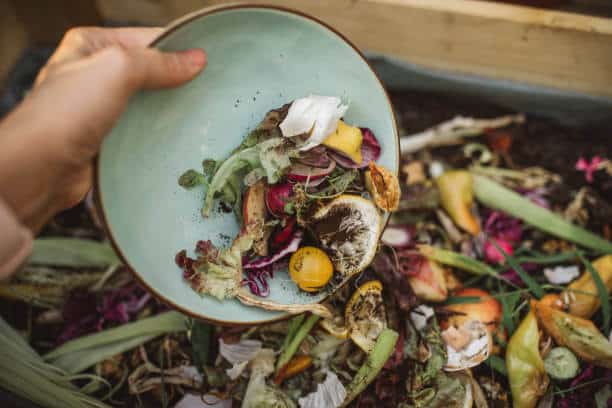
- Green waste (rich in nitrogen), such as fruit and vegetable scraps, coffee grounds, fresh grass clippings, green leaves, or fresh manure.
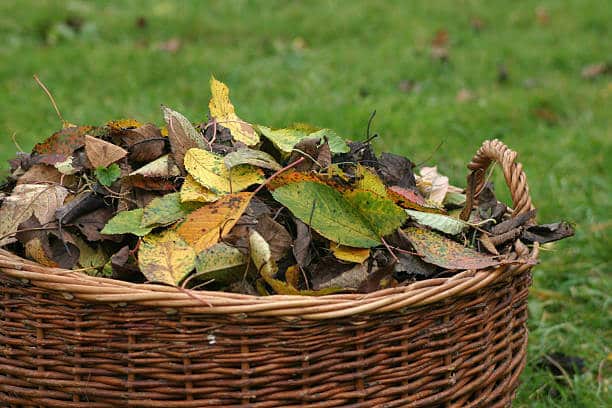
- Brown waste (rich in carbon): such as dry leaves, shredded branches, unprinted cardboard, straw, or sawdust (in small quantities).
The ideal proportion of materials to achieve good hot compost will be 2 parts brown waste to 1 part green waste, as the balance between carbon and nitrogen is key to reaching high temperatures and achieving efficient decomposition.
Step by Step
1º Choose a good location: Place your pile or composter directly on the ground, in a spot with some shade and protected from the wind. It’s important that it’s in contact with the earth to allow beneficial organisms (like worms or bacteria) to enter and facilitate drainage.
2º Create the pile with sufficient volume to generate heat: Ideally, it should be at least 1 m³ (1 meter high x 1 meter wide x 1 meter deep). If it’s smaller, it will struggle to maintain the appropriate temperature.
3º Alternate layers of brown and green materials: Mix lightly to encourage contact between them. It’s advisable to chop larger materials to facilitate their decomposition.
4º Control the moisture: The compost should have the moisture of a wrung-out sponge: neither dry nor soggy. If you can squeeze a handful of the material and only one or two drops come out, it’s perfect. If, on the other hand, it’s too wet, you can incorporate more dry waste (like leaves or cardboard) and turn the pile well. If it’s too dry, simply water it a bit when adding materials.
5º Mix and observe: During the first week, microorganisms will begin to decompose the materials, and the temperature will rise. It’s a good sign if you feel warmth when you carefully put your hand in. From the second or third day, it’s advisable to turn the pile every 3–5 days to oxygenate it and distribute the heat. You can also use a compost thermometer to ensure it stays between 50°C and 80°C.
6º Maintain the process for 2–4 weeks: With good care, your hot compost can be ready in about 3 – 6 weeks, depending on the climate, materials, and mixing frequency.
What if I Have Little Space?
Don’t worry, even if the space required for hot composting is 1 m³, there are always other equally valid options to achieve the results that this type of compost offers. These are:
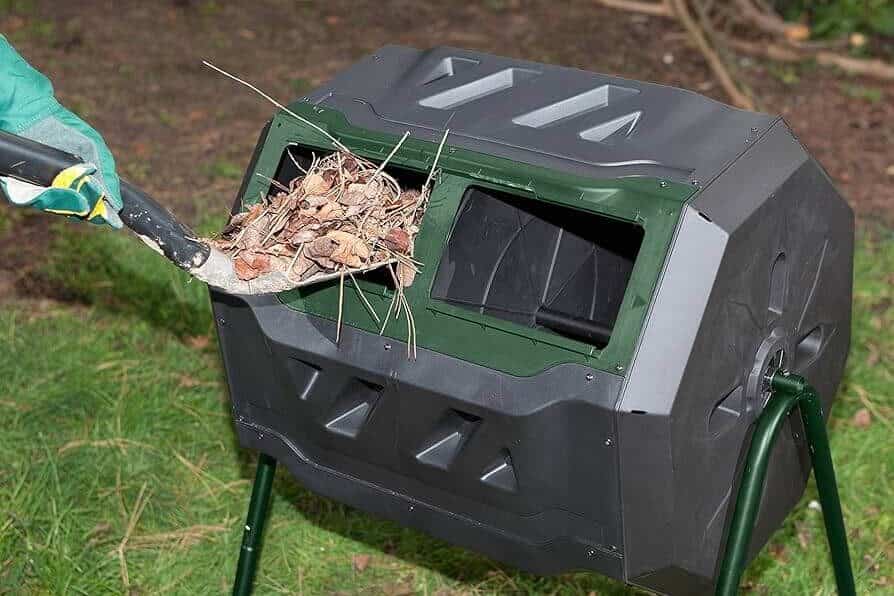
- Tumbler composting: Although more expensive, this system allows us to make hot compost in reduced spaces. It allows for good control of moisture and temperature, and by frequently rotating the tumbler, oxygenation is promoted, and decomposition is accelerated.
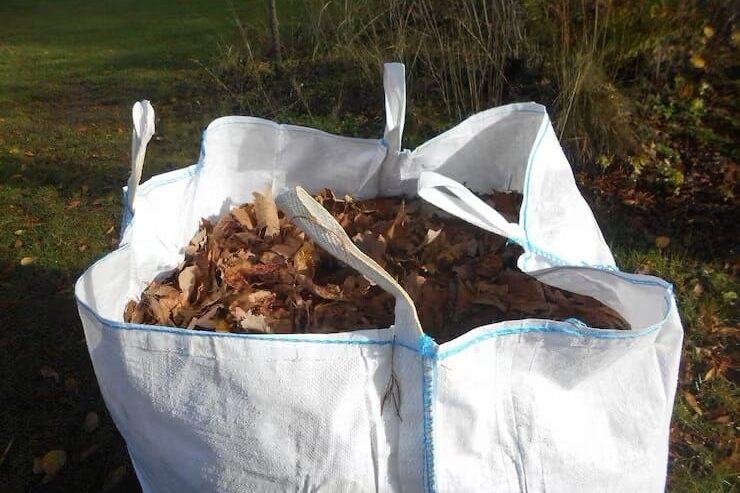
- Use of jute, raffia, or geotextile fabric bags: These containers allow for a certain level of ventilation and can be placed in sunny corners. If filled with an adequate proportion of waste and mixed every few days, they work surprisingly well for small quantities of hot compost.
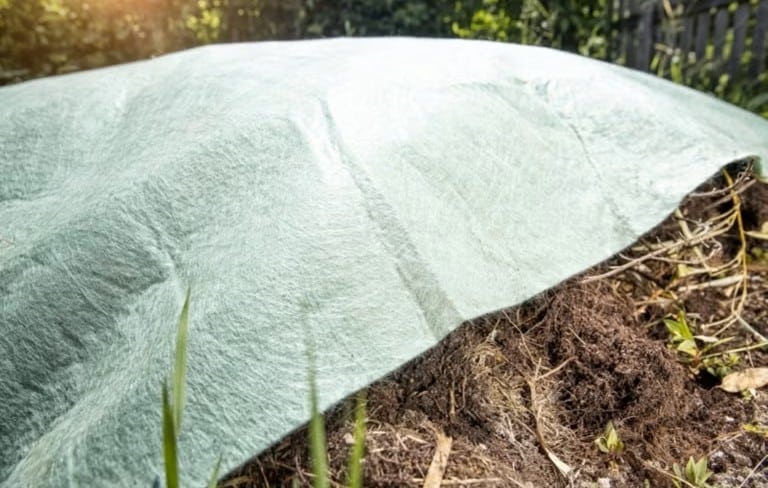
- Small batch composting with extra insulation: If you cannot achieve the ideal volume in a single pile, you can work in smaller batches, making sure to thermally insulate the pile (with straw around it, a tarp, cardboard, or even old blankets). This helps retain the heat generated by the microorganisms and keep the process active.
In short, if you don’t have the ideal space for a compost pile, don’t worry. With a little ingenuity, perseverance, and a willingness to experiment, it’s possible to adapt hot composting to your conditions and continue obtaining a quick, effective, and life-filled fertilizer for your vegetable garden. Additionally, if you want to further accelerate decomposition and enrich the final result, you can incorporate already finished bokashi into the mix. This will provide beneficial microorganisms and additional nutrients that will enhance the quality of the compost.
Below, we leave you a series of related products that may be useful when making hot compost:
🍂 Compost Tumbler
Accelerate the composting process, aerate materials effortlessly, and get quality homemade fertilizer.
🏴 Geotextile Fabric
A staple for maintaining moisture, regulating temperature, and promoting efficient composting.
🌡 Compost Thermometer
Measure the internal temperature of the pile and ensure the compost reaches ideal conditions.