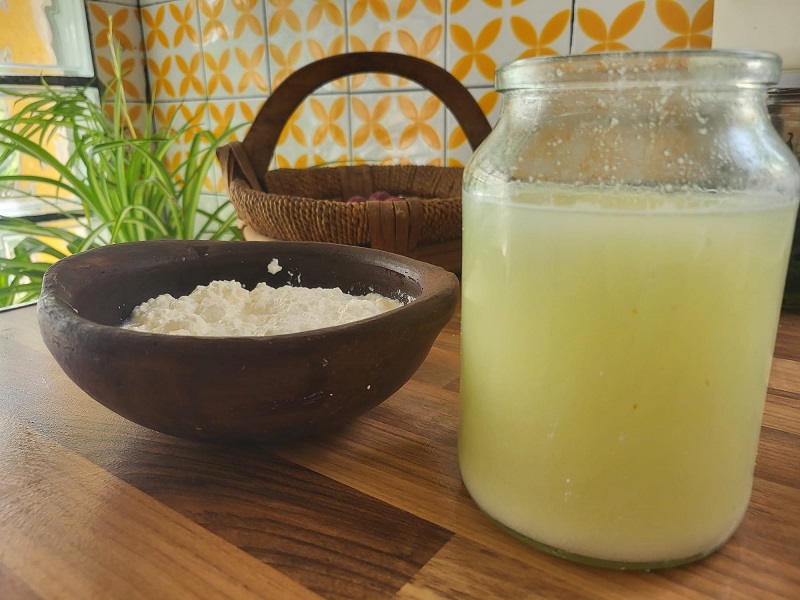

Fermented Plant Juice (FPJ) is one of those preparations that seems almost magical the first time you make it. You take plants from your garden, mix them with water and sugar, leave them to ferment for a few days, and the result is a liquid packed with lactic acid bacteria, enzymes, and readily available nutrients that your soil and plants will absolutely love.
What is FPJ and Where Does It Come From?
FPJ is part of the Korean Natural Farming (KNF) system developed by Cho Han-kyu. The concept is to harness the microorganisms that live naturally on plants and in the environment to create highly effective biological amendments without any synthetic chemicals. The lactic acid fermentation that occurs during the process preserves plant nutrients in a stable and readily absorbable form, while also introducing millions of beneficial microorganisms into the soil, improving its structure and biological life.
Which Plants Can Be Used?
Almost any green plant can be used, but the most effective are those with high nutrient or active compound content:

- Comfrey (Symphytum officinale): Extraordinarily rich in potassium, calcium, and nitrogen
- Nettle (Urtica dioica): Classic source of nitrogen and iron
- Horsetail (Equisetum arvense): Exceptional silica content, strengthens plant cell walls
- Aloe vera: Auxins and gibberellins that stimulate root growth
- Young growth tips: Any actively growing plant tips in spring are excellent choices
Step-by-Step Preparation
- Harvest fresh plant material (young leaves or tips) in the morning when they are most active
- Chop or shred the plant material finely
- Weigh the plant material and mix with an equal weight of brown sugar or molasses
- Pack into a clean glass jar, leaving about 20% space at the top
- Cover the jar with breathable cloth (not an airtight lid) to allow gases to escape
- Leave to ferment at room temperature (18–25°C) for 3–7 days, stirring daily
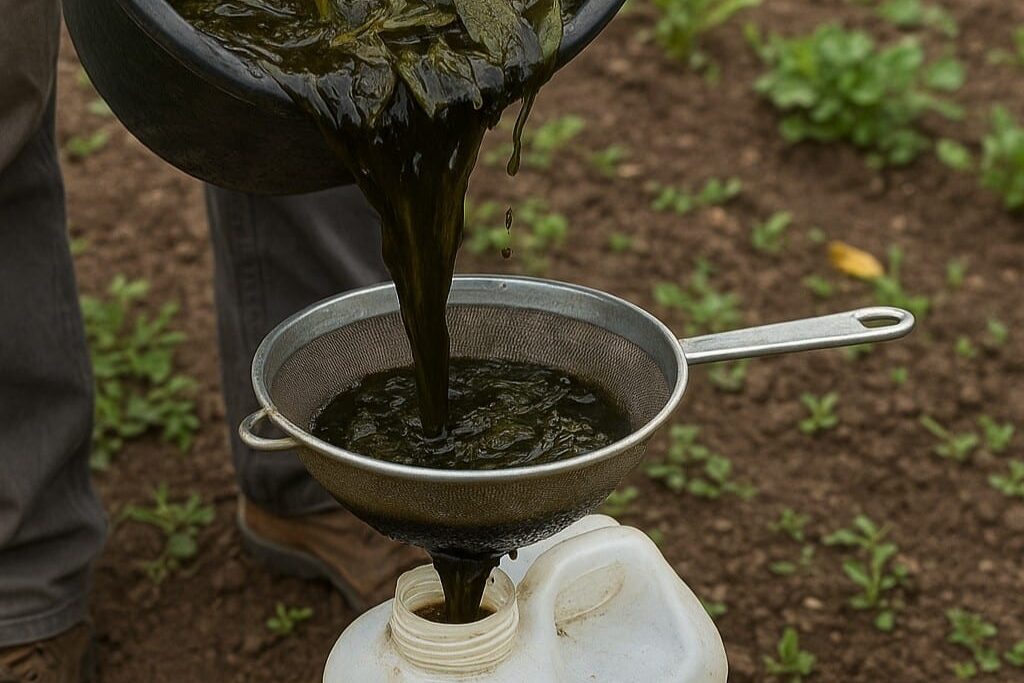
- Once fermentation is active (you will see bubbling), strain the liquid through a fine cloth
- Store the liquid in a sealed glass jar in a cool, dark place
How to Use FPJ
FPJ must always be diluted before use. Never apply it undiluted as this can harm your plants.
| Application | Dilution Ratio |
| Foliar spray | 1:500 to 1:1000 |
| Soil drench | 1:500 to 1:1000 |
| Seedling tray | 1:1000 |
Benefits for Your Garden
- Increases microbial diversity in the soil
- Improves nutrient absorption by plant roots
- Stimulates germination and early root development
- Strengthens plant immunity against pests and disease
- Completely free from synthetic chemicals
- Low-cost — made from plants you likely already have
FPJ represents one of the simplest yet most powerful tools in the natural gardening toolkit. Once you have made your first batch and seen the results, it tends to become a permanent part of your garden routine.