Today we bring you a simple, natural and very effective tool that will make your garden, a healthy and full of life garden. This is the Compost Tea or Compost Tea, a liquid preparation made from mature compost.
Much more than a fertilizer, this preparation is an infusion full of microbial life that will transform the soil of our gardens and enhance the well-being of plants from root to leaf.
Don’t go away! Find out exactly what it is, how to prepare it and what its most common uses are. If you’re looking for a homemade and sustainable way to care for your crops, you’re in the right place.
What is Compost Tea?
Compost tea is a liquid infusion rich in beneficial microorganisms and nutrients, made from well-ripened compost. This preparation is used as a natural fertilizer to improve soil health, stimulate plant growth and strengthen plant resistance to pests and diseases.
Unlike traditional, solid compost, this preparation is easily applied in liquid form allowing the microorganisms to act faster. It is a way to bring microbial life directly to where plants need it most.
Uses of Compost Tea
The Compost Tea is a versatile ally for the care of our vegetable garden. Thanks to its richness in beneficial microorganisms, we can apply it in several ways to obtain different benefits:
- Foliar fertilizer: Spraying it directly on the leaves, it strengthens the natural defenses of the plants and improves their general health.
- Improve the soil: When watered at the base of the plants, it enriches the microbiology of the soil, favoring nutrient absorption and root development.
- Disease prevention: Its microorganisms help to balance the orchard ecosystem, hindering the advance of harmful fungi and bacteria.
- Recovery of impoverished soils: It is ideal to regenerate degraded soils or soils that have lost microbial life due to excess of chemicals or inadequate irrigation.
- Reinforcement in transplants: Applied at the time of transplanting, it reduces stress and favors rooting.
How to Prepare
Make Compost Tea at home is very simple, we will only need some basic materials to extract and multiply the beneficial microorganisms from the compost creating a liquid rich in microbial life.
Read on to find out what you need and how to do it step by step:
Basic Ingredients and Materials
- 1 bucket or container of about 10 or 20 liters
- 1 cloth or fine mesh bag (can be an old sock or a bag for nuts)
- Mature and good quality compost (no fresh debris or bad odor).
- Non-chlorinated water (24h rested or rainwater)
- 1 tablespoon per liter of water of brown sugar, cane extract or molasses (this will be the food source for the microorganisms).
- 1 water pump or aerator (optional, but highly recommended)
Step by Step
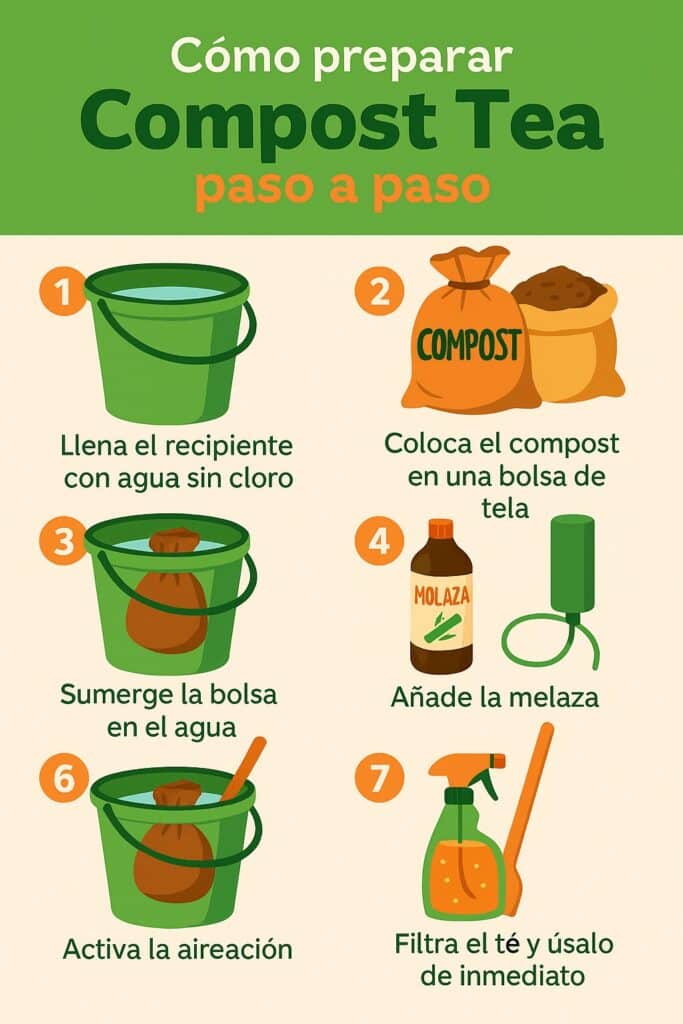
1º Fill the container with water leaving a free space on top to avoid spillage.
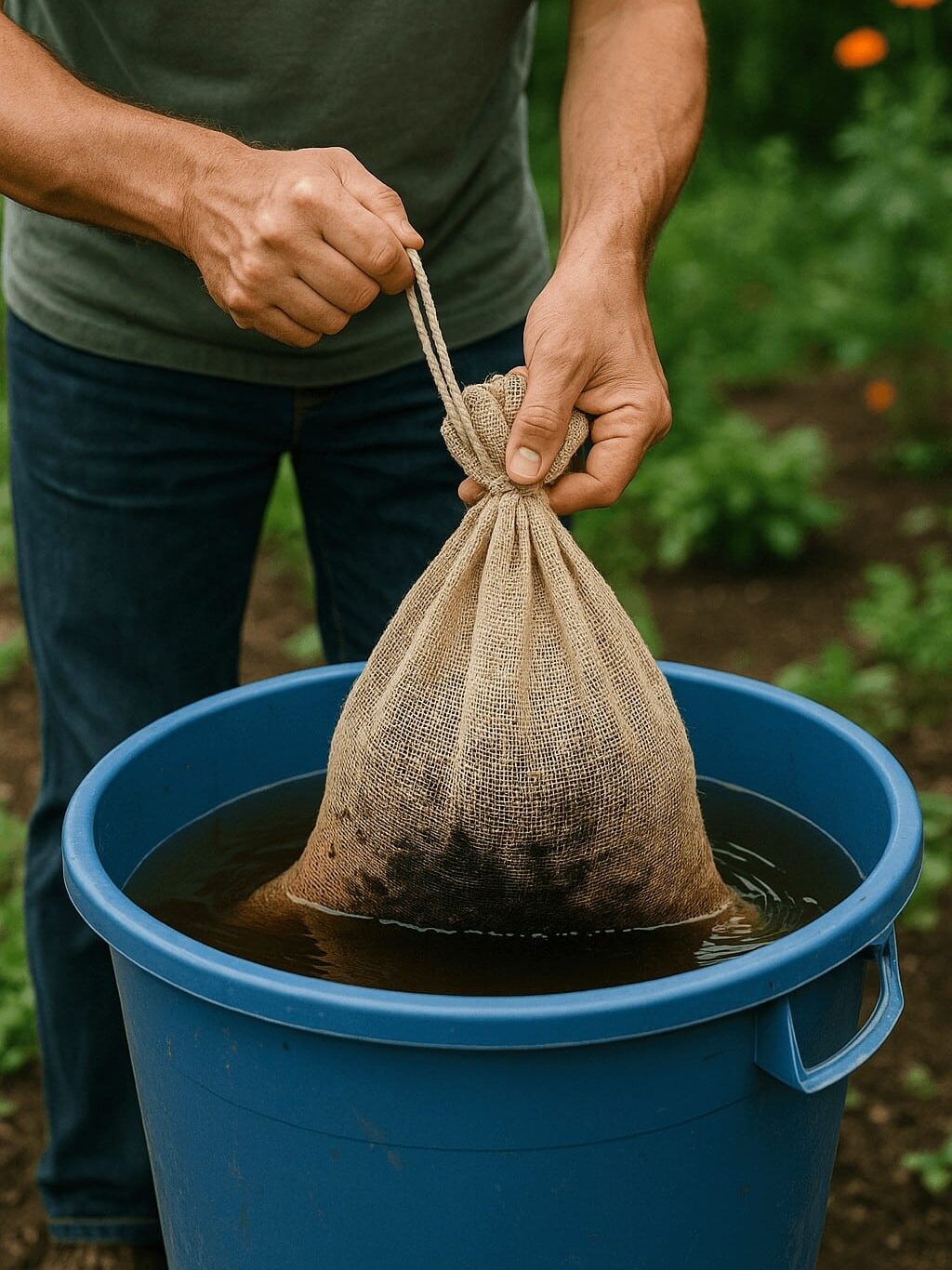
2º Place the compost inside the cloth bag. Use approximately 1 part compost to 10 parts water.
3º Submerge the bag in the water, making sure it is well submerged.
4º Add the brown sugar or molasses. This will serve as food for the microorganisms and will favor their multiplication.
5º Activate aeration if you have a water pump. Oxygenating the mixture for 24-36 hours will help the beneficial microorganisms to reproduce aerobically (without generating bad odors or unwanted bacteria). If you do not have a water pump, stir it occasionally by mixing it several times a day to avoid anaerobic fermentation.
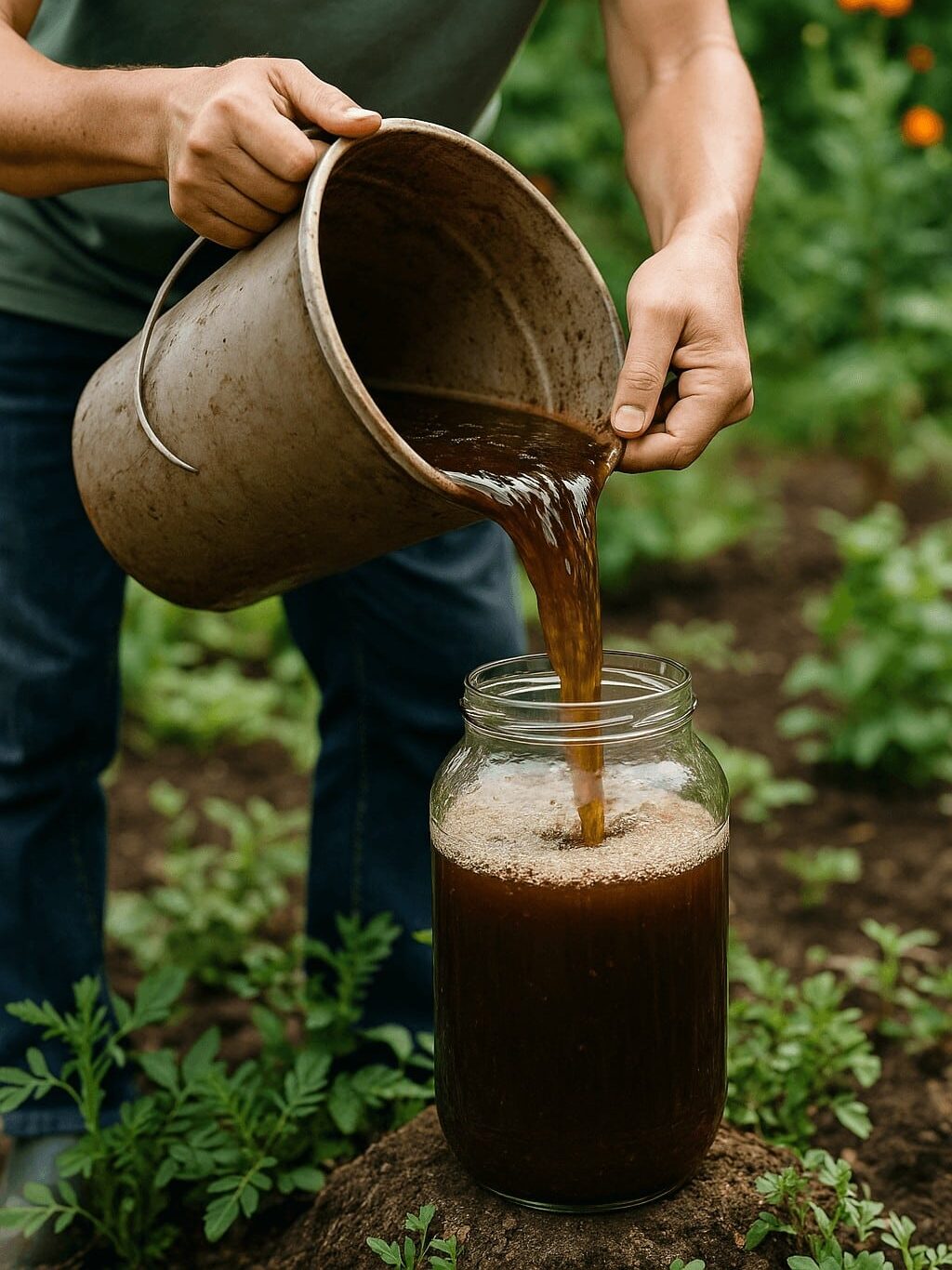
6º Remove the compost bag, filter the liquid and you will have your compost tea ready to use.
Conservation
Once the Compost Tea has finished its fermentation process, it is important to store it correctly so that it maintains its properties and benefits. As it is a living solution, rich in beneficial microorganisms, its shelf life is limited, so it is ideal to use it as soon as possible.
Here are some tips for their conservation:
- Use it in the first 24 to 48 hours: This is the period when the microorganisms are most active and the tea is most effective.
- Store in a closed, but not airtight container: Use a clean container with a lid that allows gas exchange to avoid internal pressure. Do not close it completely so as not to suffocate the microorganisms.
- Store in a cool, dark place: Direct light and heat can quickly degrade the quality of the tea. Look for a cool place without sun exposure.
- Avoid refrigeration or freezing: Although it may seem like a good idea, extreme cold stops microbial activity or may even kill beneficial microorganisms.
- Do not shake the container too much: Excessive movement can destabilize the microbial population. Keep it as quiet as possible.
Remember, this infusion should be prepared with the intention of being used in the short term. It is best to organize to apply it in the garden just after fermentation, taking advantage of all its microbial richness.
How to Apply Compost Tea
Applying Compost Tea properly is key to get the best results in your garden. This preparation not only fertilizes, but also improves soil health, boosts plant growth and strengthens their defenses. Below, we explain how to apply it:
As foliar fertilizer
One of the most effective ways to apply Compost Tea is by spraying it directly onto plant leaves. This technique allows the microorganisms to adhere to the leaf surfaces and the tops of the plants, where they help strengthen their natural defenses. To do this, simply use a clean sprayer and apply the tea in the early morning or late afternoon, avoiding the hottest hours of the day.
To enrich the soil
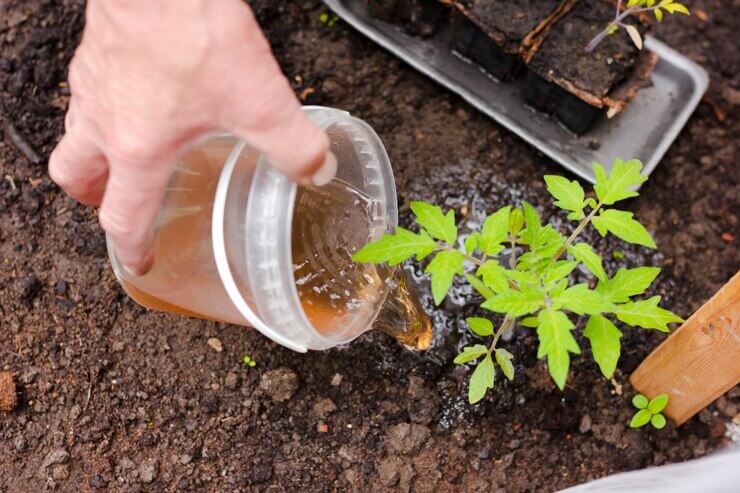
Watering around the base of the plants. In this way, beneficial microorganisms are dispersed throughout the root system, which improves soil microbiology, facilitates nutrient absorption and promotes the development of strong roots.
In transplanting or sowing
Applying it to the base of the plant and around the roots helps reduce transplant stress and promotes better rooting. Be sure to apply it just before or after placing the plant in its new location to give it an extra boost in its adaptation.
Although this infusion is beneficial, it is not necessary to use it in large quantities or on a daily basis. Ideally, it should be applied every 2 to 3 weeks during the growing season. If you are working on the recovery of an impoverished soil, you can use it more frequently, but always paying attention to the reaction of the plants and the soil.
Finally, here are a couple of extra tips:
If the tea compost is too concentrated, dilute it with water before applying it to prevent too much organic material from accumulating on the plants or soil.
It is not a substitute for traditional (solid) compost. Although it is an excellent supplement it does not replace the use of solid compost in the soil. It is best used as part of a comprehensive approach to maintaining a healthy garden.
Here are some recommendations that we think you may find useful when preparing your compost tea:
🪣 10L bucket
A basic for preparing compost tea, substrate mixtures or composting organic waste.
👉 View on Amazon🍯 Cane Molasses
Easy to use and rich in nutrients, to enhance ferments, compost tea and natural preparations.
👉 View on Amazon