Do you think you can’t have plants because your apartment is dark or interior? Wrong! The lack of direct sunlight is not a death sentence for all species. In fact, many tropical plants prefer shade and will get scorched if exposed to direct sun. If you’ve killed cacti and succulents (which need a lot of sun), these 10 resilient plants are for you. They are survival champions and will bring life to that dark corner of your living room or hallway.
Why Do Your Plants Die? (Light is Key)
Before we start, a secret: “Low light” does not mean absolute darkness. No plant can live in a windowless room.
- Low light: You can barely read a book at that distance from the window.
- Medium light: Soft, indirect light.
- Bright light: Direct sun or very close to a south-facing window.
The plants on this list thrive in the first two categories.
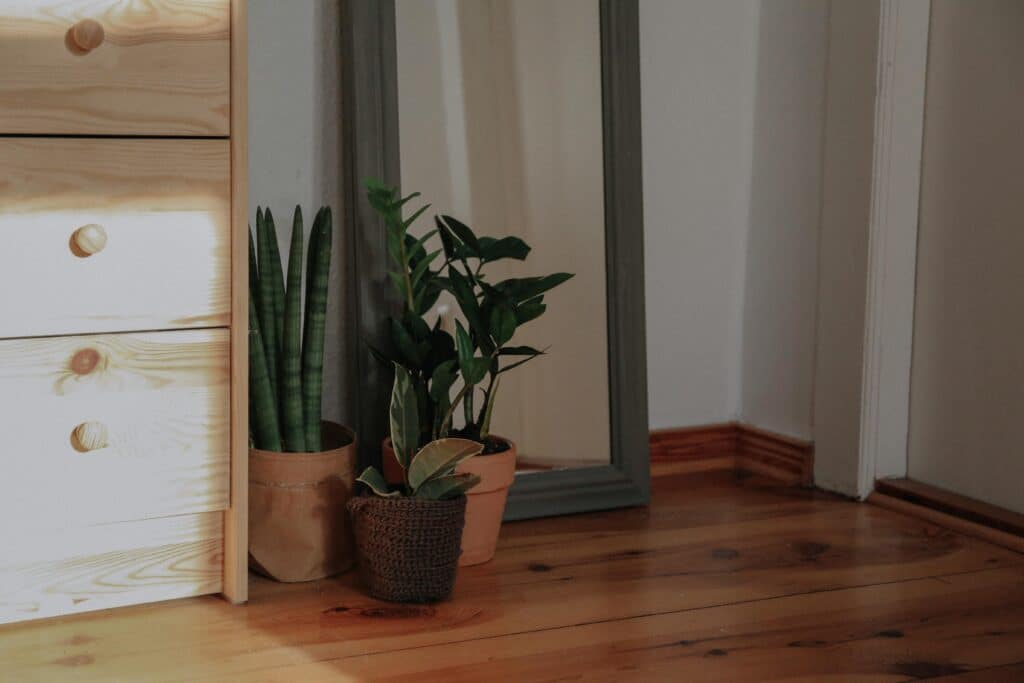
1. Sansevieria (Snake Plant / Mother-in-Law’s Tongue)
The queen of resilience. It’s practically indestructible. You can forget to water it for weeks and keep it in a dark corner, and it will remain perfect. Its vertical, sculptural leaves look great in any modern decor.
- Watering: Very sparse. Let the soil dry out completely.
- Bonus: Purifies the air at night.
2. Zamioculcas (ZZ Plant)
The raven plant. With its shiny, waxy leaves, it looks like plastic, but it’s 100% natural. It stores water in its roots (rhizomes), allowing it to tolerate drought like no other. It grows slowly but steadily in very low light conditions.
- Watering: Moderate to sparse.
- Caution: Toxic if ingested (be careful with pets).
3. Pothos (Epipremnum aureum)
The classic trailing plant. If you want a fast-growing hanging plant, Pothos is your friend. Although it will lose some of its variegation (the yellow/white spots) in low light, it will continue to grow green and healthy. Plus, it’s very easy to propagate in water.
- Watering: When the soil is dry to the touch.
- Use: Ideal for high shelves.
4. Aspidistra (Cast Iron Plant)
The cast iron plant. The quintessential plant for building entrances. It tolerates drafts, dust, low light, and forgotten waterings. It’s a slow-growing but very long-lived plant with large, elegant green leaves.
- Watering: Moderate.
- Resistance: Very high to pests.
5. Aglaonema (Chinese Evergreen)
Color in the shade. If you’re tired of green, Aglaonema offers leaves with silver, pink, or red patterns. Amazingly, it retains these colors even in low light conditions (though they shine brighter with medium light).
- Watering: Keep the substrate slightly moist (not waterlogged).
- Bonus: Very decorative.
6. Spathiphyllum (Peace Lily)
Flowers in the dark. It’s one of the few plants that can bloom indoors in low light. Its white flowers are elegant and long-lasting.
- Watering: It tells you: its leaves dramatically droop when thirsty. Water it, and they’ll revive in hours.
7. Dracaena (Corn Plant / Brazilian Trunk)
A tropical touch. It looks like a small palm tree. Many varieties exist (Marginata, Fragrans…), and all tolerate partial shade well. Be careful with overwatering; it’s its Achilles’ heel.
- Watering: Let the top layer of the substrate dry out.
8. Boston Fern
The classic leafy plant. It needs humidity, not direct light. If you have a bathroom with a small window, this is its ideal spot. It loves having its leaves misted.
- Watering: Frequent. Don’t let the soil dry out completely.
9. Spider Plant (Malamadre)
The survivor. Very easy to care for and propagate (it produces “pups” on long stalks). It tolerates low light, although it will lose its white stripe if the darkness is extreme. Perfect for hanging baskets.
- Watering: Moderate.
10. Monstera Deliciosa (Swiss Cheese Plant / Adam’s Rib)
The giant. Yes, Monstera prefers bright light to produce many fenestrated (holed) leaves, but it survives in medium/low light conditions. It will grow slower and with more solid leaves, but it will still bring that impressive jungle touch.
- Watering: When the substrate dries out.
Maintenance for Low-Light Plants: The Secret to Success
Having plants in dark corners requires a slightly different approach than a sunny garden. Here are three fundamental pillars:
1. Leaf Cleaning is Vital
In low-light locations, every millimeter of leaf counts for photosynthesis. Dust acts like a shield, blocking the little energy they receive.
- Tip: Wipe the leaves with a damp cloth once a month. For large-leaved plants like Monstera or Zamioculcas, this will make the difference between a plant that “survives” and one that “grows healthy.”
2. Choose the Right Pot
When watering less frequently, moisture can stagnate. Always use pots with a drainage hole. If you like a decorative pot without holes, use it only as a “cachepot” (place the plant in a plastic nursery pot inside).
3. Strategic Rotation
If you notice your plant leaning too much towards the light source (phototropism), rotate it a quarter turn each week. This will prevent it from becoming “bald” on one side and maintain balanced, aesthetic growth.
Common Problems (Troubleshooting)
Is your shade plant not looking well? Here are the symptoms and cures:
- Yellow and mushy leaves: Almost always overwatering. Let the soil dry out completely. If the problem persists, check for root rot.
- Leaves with brown and dry tips: Lack of ambient humidity. This is common in Boston Ferns. Mist with water or place a pebble tray with water underneath (without the base of the pot touching the water).
- Very long stems and small leaves: The plant is “stretching” to find light (etiolation). Even if it’s a shade plant, it might need to be a meter closer to the window.
- Loss of color or variegation: In plants like Pothos or Spider Plants, the white spots disappear to maximize green and capture more light. This is normal if the light is very low.
Frequently Asked Questions about Shade Plants
No plant survives in total darkness (a bathroom without windows, for example). All plants need some light for photosynthesis. Sansevieria and Aspidistra are the ones that best tolerate the shadiest corners, but always with a minimum indirect light source.
Yes! If you have a really dark corner you want to decorate, you can install full-spectrum bulbs (Grow lights). They work very well and allow you to have more demanding species in impossible spots.
Low-light plants grow slower, so they need less “food.” Fertilize only in spring and summer, once a month, and with half the manufacturer’s recommended dose. Don’t force them to grow if they don’t have enough light to sustain that growth.
Beware, some plants like Pothos or Zamioculcas are toxic if ingested. If you have curious cats or dogs, opt for the Boston Fern or Spider Plant, which are 100% safe (Pet-friendly).
Start Your Indoor Jungle Today
Don’t let a gloomy apartment stop you. Start with a Sansevieria or a Pothos; they are the best for gaining confidence. Once you understand that the greatest danger isn’t a lack of light, but rather overwatering, you’ll see how your home transforms into a green and relaxing haven.
Do you have any questions about a specific plant? Leave us a comment, and we’ll help you choose the best one for your dark corner!