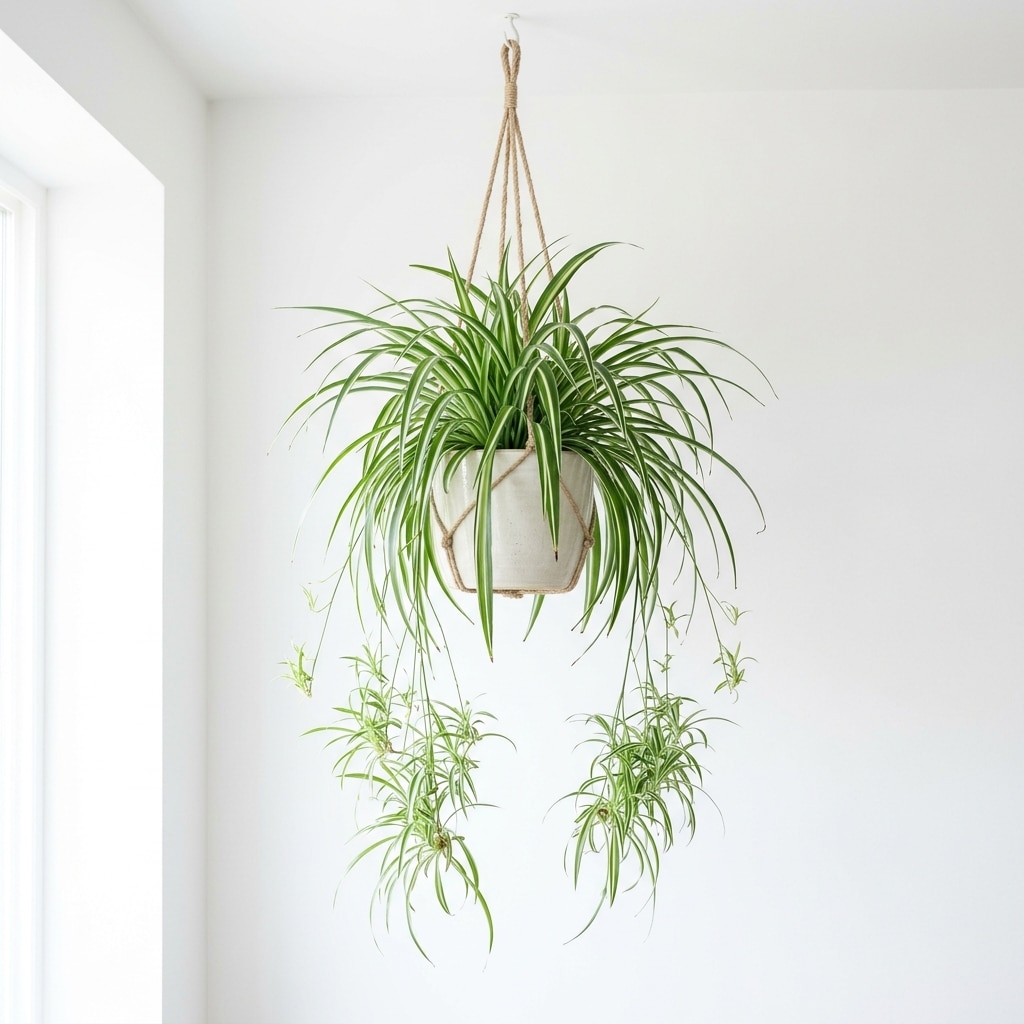
The Spider Plant (Chlorophytum comosum), also popularly known as Malamadre, Spider Plant, or Ribbon Plant, is one of the most iconic and rewarding houseplants available. Its ability to purify the air and its ease of propagation make it an ideal choice for both beginners and experts seeking a retro, jungle-like aesthetic.
Below, we cover its essential care, how to keep the tips from turning brown, and the easiest way to fill your home with ‘spiderettes’ without spending a penny.
Why the Spider Plant is a Native Survivor?
Originally from South Africa, the Spider Plant is an evergreen plant known for its tuberous roots, capable of storing water for periods of drought. This characteristic is its life insurance: it can withstand watering neglect that would kill other houseplants.

Benefits of having a Spider Plant at home:
- Air Purification: It’s one of the star plants from the NASA study. It effectively removes carbon monoxide and xylene from the environment.
- Pet Safety: Unlike Pothos or Monsteras, the Spider Plant is not toxic to cats or dogs.
- Decorative Versatility: Its hanging habit makes it perfect for high shelves or suspended planters.
Step-by-Step Care Guide
Although the Spider Plant survives almost anywhere, if you want it to look lush and full of new growth and spiderettes, you must pay attention to these four pillars:
1. Lighting: The Perfect Balance
The Spider Plant loves light, but hates direct midday sun.
- Indoors: Near a window with sheer curtains.
- Shade: It tolerates partial shade, but varieties with white stripes (variegated) will lose color and become entirely green to capture more energy.
- Outdoors: It can live outdoors in temperate climates, always in the shade.
2. Watering: The Art of Not Overdoing It
Thanks to its thick, water-storing roots, overwatering is its biggest enemy.
- Summer: 2-3 times a week if it’s very hot.
- Winter: Once a week or every 10 days is sufficient.
- The trick: Touch the soil. If the top 2 cm are dry, it’s time to water. If the leaves look limp and pale, it’s thirsty.
3. Temperature and Humidity
It’s a hardy plant that can withstand temperatures from 7°C to 30°C. However, its biggest problem is usually dry air. If the leaf tips turn brown, it’s a clear sign that the air is too dry. Mist its leaves with water occasionally.
4. Soil and Fertilization
It’s not demanding about soil. A quality universal potting mix with a bit of perlite to improve drainage is ideal. Fertilize it every 15 days during spring and summer with a liquid fertilizer for green leafy plants.
The ‘Malamadre’ Phenomenon: How to Propagate Spiderettes
It’s called Malamadre (Bad Mother) because it “expels” its offspring on long yellow stems (stolons). Those small hanging clusters of leaves are complete potential plants.
How to propagate:
- In water: Cut the spiderette and place its base in a jar with water. In less than two weeks, it will have long, white roots.
- In soil: Plant the spiderette directly in a small pot without cutting it from the mother plant. When you see it growing independently, cut the connecting stem.
Common Problems and Solutions
Why does it have brown tips?
It’s usually due to a lack of ambient humidity or the chlorine/fluoride in tap water. Use water that has sat for 24 hours or rainwater, and mist the plant frequently.
Limp and weak leaves?
It could be excessive heat or that the roots have filled the entire pot. Spider Plants grow quickly and often need annual repotting.
Pruning and Maintenance
Spider Plants need almost no pruning. Trim off brown or yellow leaves at the base with clean scissors, and cut brown tips following the leaf’s natural V-shape to keep it looking neat. If the plant produces more stolons than you want, simply snip them off — it won’t hurt the mother plant at all.
Repotting
Its thick, tuberous roots grow so aggressively they can crack plastic pots. Repot every 1-2 years in spring, going up just one size. If the plant is very crowded, you can divide it at the roots into two or more plants — an instant way to multiply your stock.
Frequently Asked Questions (FAQ)
Can I keep a Spider Plant in the bathroom?
Yes, it’s an excellent spot thanks to the humidity from shower steam, as long as the bathroom has a window with some light.
Why isn’t my Spider Plant producing spiderettes (babies)?
The Spider Plant usually starts producing stolons and spiderettes when its root system is somewhat pot-bound. If the pot is too large, it will focus on growing itself rather than reproducing.
Why are my Spider Plant’s leaves turning pale or all green?
Too little light. Variegated varieties need bright, indirect light to keep their stripes — move it closer to a window, out of direct sun.
How long do spiderettes take to root in water?
Usually 7-14 days. Once the roots are 3-5 cm long, pot the baby in regular potting mix and keep it moist for the first couple of weeks.