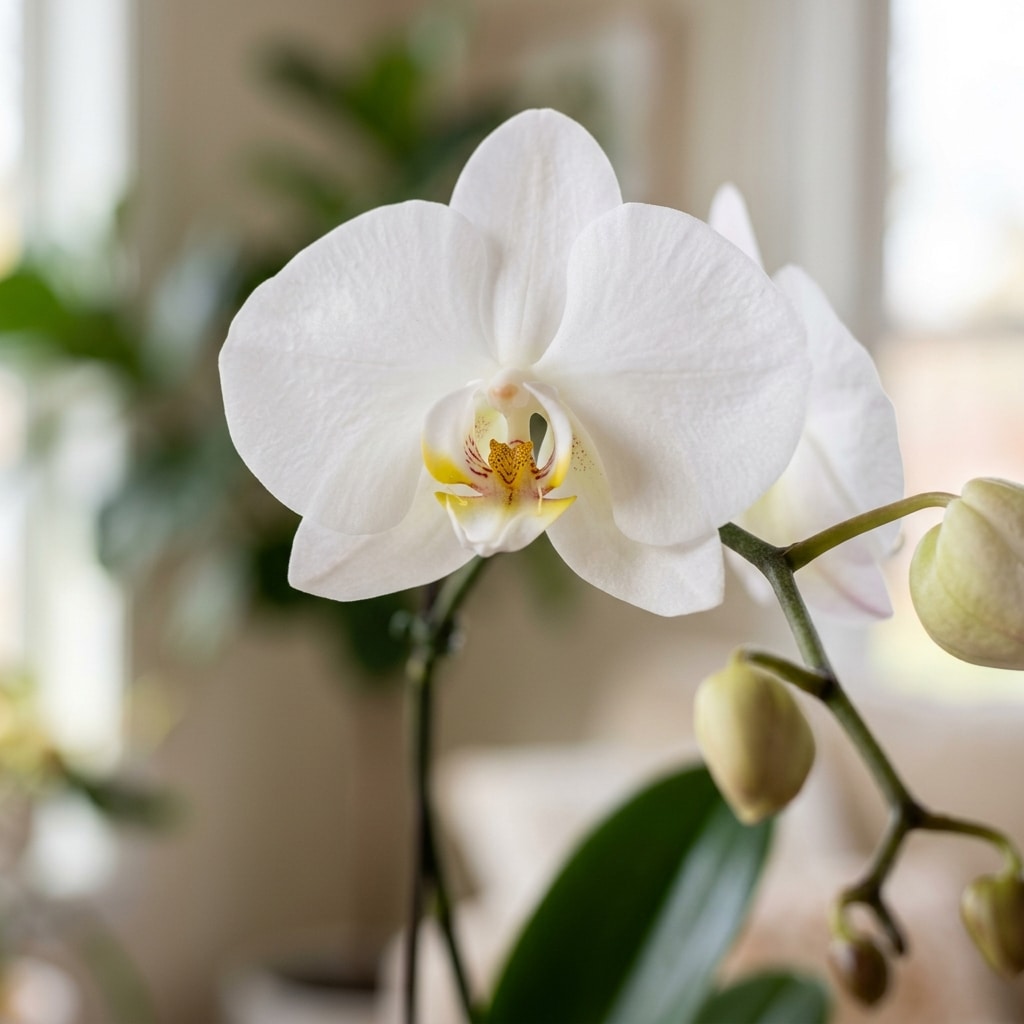
Giving or receiving a Phalaenopsis orchid is a classic, but for many, the joy only lasts as long as the first bloom. There’s a myth that orchids are impossible to care for, reserved only for experts with greenhouses. Nothing could be further from the truth.
The Phalaenopsis, also known as the moth orchid, is one of the most resilient and adaptable indoor plants if you know its basic rules. In this guide, we’re going to demystify its cultivation so your orchid not only survives but re-blooms year after year.
Understanding Your Orchid: An Epiphyte in Your Living Room
To properly care for a Phalaenopsis, it’s important to know that in nature, it doesn’t live in soil. It’s an epiphytic plant: it lives anchored to tree branches in tropical rainforests. This explains why its roots are green (they perform photosynthesis) and why it hates being in compacted soil.

Biological Keys of the Phalaenopsis:
- Aerial Roots: Designed to capture moisture from the air and light.
- Fleshy Leaves: Store water and nutrients, allowing it to withstand periods without rain.
- Flower Spike: Can produce flowers for months and, under certain conditions, re-sprout from old nodes.
Essential Care Guide Step-by-Step
1. Light: The Engine of Blooming
Light is the most important factor for an orchid to re-bloom.
- Location: Near a very bright window, but always with a sheer curtain to diffuse direct sunlight (which would burn its leaves).
- Leaf Color: This is the best indicator. If they are very dark green, they need more light. If they are yellowish or have brown spots, they have too much sun. The ideal color is a bright olive green.
2. Watering: Look at the Roots!
Forget the calendar (“water every Wednesday”). Your orchid will tell you when it’s thirsty through the color of its roots:
- Green Roots: The plant has sufficient hydration. Do not water.
- Grayish or Silvery Roots: The plant is dry. It’s time to water.
Immersion Watering Trick: Submerge the (transparent) pot in a container of water for 10-15 minutes. Let all excess water drain before placing it back in its decorative cachepot. Waterlogging at the base is certain death by fungus.
3. Temperature and Humidity
Being tropical, Phalaenopsis orchids love stability:
- Temperature: Between 15°C and 28°C (59°F and 82°F). Avoid cold drafts and direct proximity to radiators.
- Humidity: They need relative humidity of 50-70%. If your home is dry, place the pot on a pebble tray with water (without the base of the pot touching the water) so that evaporation creates a humid microclimate.
4. Substrate and Transparent Pot
Never use universal potting soil. Orchids need pine bark or specific orchid substrate that allows the roots to “breathe.” Furthermore, transparent pots are vital not only to see the color of the roots but also to allow them to perform photosynthesis.
How to Get Your Orchid to Re-bloom
When the flowers fall, many people think the plant has died. Wrong! It’s just resting. To stimulate new blooms:
- The Flower Spike: If the spike turns brown and dry, cut it from the base. If it remains green, you can cut it above the second or third node to try to encourage a side branch.
- Temperature Difference: During autumn, try to let the plant experience a temperature difference of about 5-8 degrees Celsius (9-14°F) between day and night (by moving it to a glazed balcony or lowering the heating at night). This “thermal stress” triggers new flower spike growth.
- Fertilization: Use a specific orchid fertilizer every 15 days after the resting period.
Common Problems and Quick Diagnosis
- Wrinkled and Soft Leaves: Interestingly, this is often a symptom of rotten roots due to overwatering (the plant cannot absorb water even if the soil is soaked).
- Flower Buds Falling Before Opening: Cold drafts, lack of light, or the presence of ripe fruits nearby (they produce ethylene gas that wilts flowers).
- Mealybugs: These are small white “cotton-like” pests. Clean them one by one with a cotton swab dipped in alcohol.